Museum report·Hsinchu
Taiwan Entrepreneur Donates €6M Rodin 'Burghers of Calais' to NTHU — Along With a Pointed Lesson in Integrity
Businessman Hsieh Hong-liang, a National Tsinghua University alumnus, has bought an authorized bronze cast of Auguste Rodin's 'The Burghers of Calais' for a reported €6 million and donated it to his alma mater, where it will stand beside the new Hongliang Art Museum opening in early 2027. The gift lands amid an integrity row over the university's president, which Hsieh invoked in an essay on the moral courage the six burghers embody.
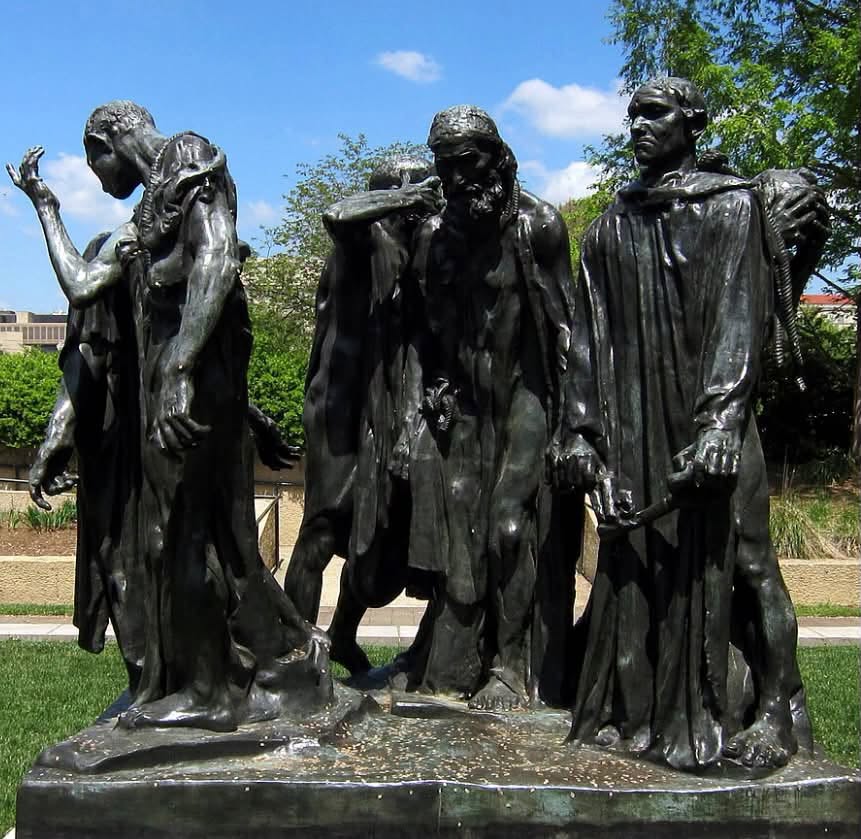
Entrepreneur Hsieh Hong-liang has given his alma mater, National Tsinghua University in Hsinchu, Taiwan, one of modern sculpture's most famous monuments. The businessman, a physics graduate of the university, paid a reported €6 million — over NT$220 million — for an authorized bronze cast of Auguste Rodin's The Burghers of Calais and donated it to the school. The six-figure group, about two metres across and weighing 1.8 tonnes, will stand beside the Hongliang Art Museum, the campus museum Hsieh fully funded, due to open in early 2027.
The donation doubles as a public rebuke. In May, NTHU president W. John Kao won reappointment, only to apply three days later — while still in office — for the presidency of the University of Hawai'i at Mānoa. Critics likened it to riding one donkey while shopping for a horse. Hsieh, a longtime defender of the university's values, marked the gift with an essay, 'On the Tsinghua Spirit, Through Rodin's Burghers of Calais,' presenting the six burghers — ordinary men who faced death rather than abandon their city — as a rebuke to expediency and a reminder of what intellectual integrity demands. He stressed the gesture targets no individual, only principles the university must guard.
Rodin's monument recalls the siege of Calais in 1346–47, when Edward III of England demanded six leading citizens surrender themselves to spare the port. Led by merchant Eustache de Saint-Pierre, six men volunteered; all were ultimately spared. Commissioned by Calais in 1884, Rodin finished the group in 1889 and it was unveiled in 1895. Only twelve authorized casts were made from his models, now held by the Musée Rodin, the Metropolitan Museum of Art, London's Victoria Tower Gardens and Tokyo's National Museum of Western Art.
The Hsinchu-bound cast was previously shown in Shanghai and St Petersburg and is clearing French cultural-property export procedures in Paris. Hsieh hopes it arrives in time for the museum's opening early next year — a campus centrepiece and, in his framing, a lasting reminder that a university's worth lies not in its rankings but in the character of the people it forms.