Museum report·Austin
100 years after Houdini's death, Austin shows the escape artist as obsessive book collector
The Harry Ransom Center in Austin has opened Houdini's Library, an exhibition revealing the escape artist as a devoted bibliophile whose collection spans centuries of magic, witchcraft and theatre history. It runs until January 24, 2027, marking the centenary of his death on October 31, 1926.
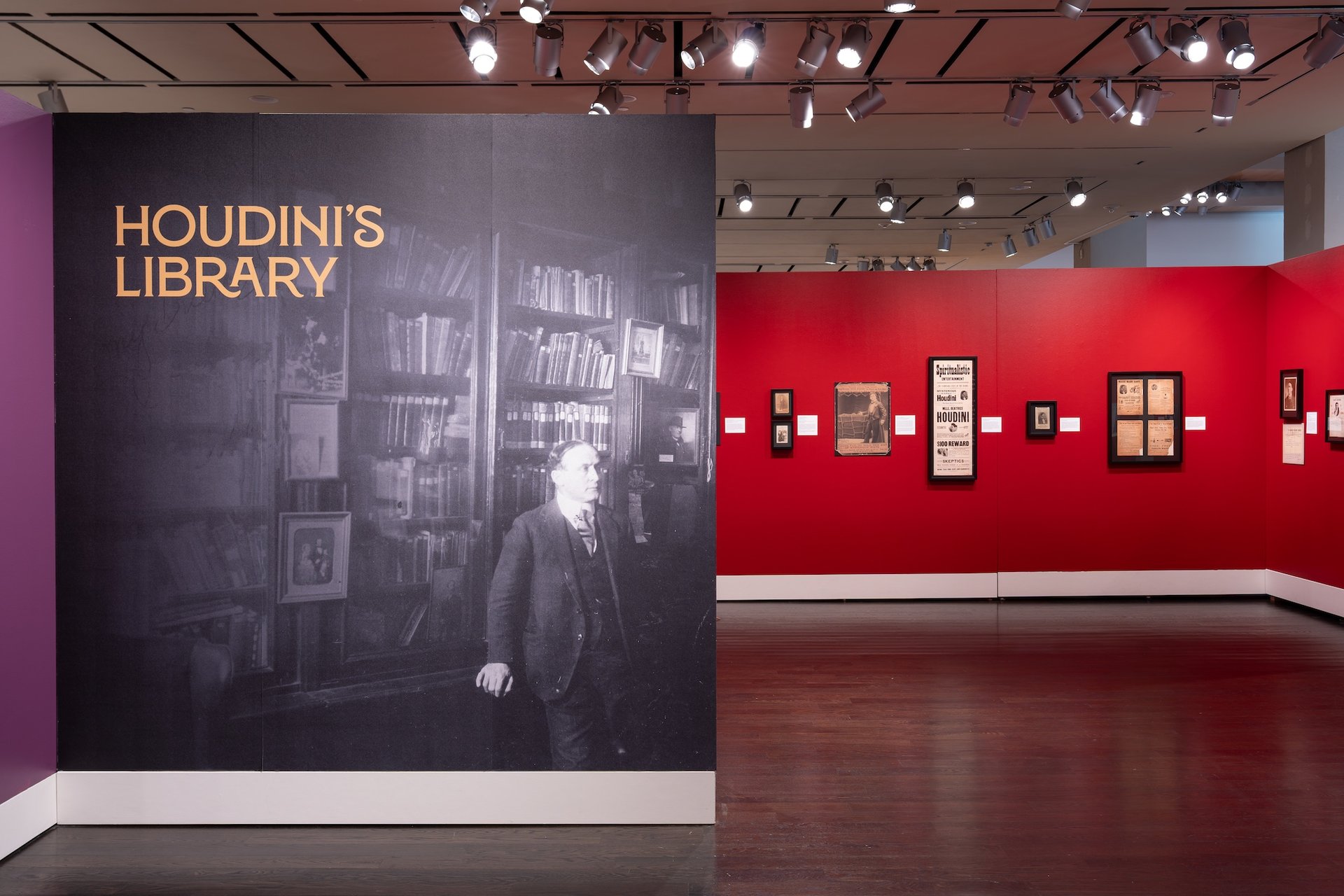
Harry Houdini is remembered for handcuffs, locked milk cans and impossible escapes, but a new exhibition in Austin argues that his most enduring act was collecting. Houdini's Library, now on view at the Harry Ransom Center at the University of Texas, traces the magician's lesser-known life as a bibliophile who spent decades gathering books, playbills, prints and ephemera on conjuring, witchcraft, psychic phenomena and the stage.
Houdini, born Ehrich Weiss in Budapest in 1874, arrived in the United States as a child and grew up in a Wisconsin town with no public library. Books nevertheless shaped him: reading the memoirs of the French magician Jean-Eugène Robert-Houdin inspired his stage name, and his father's belief that a library marked a gentleman stayed with him. In his Manhattan townhouse, volumes and papers filled shelves and teetered in piles, and he told interviewers that every spare hour went to libraries, retired magicians, collectors and old bookshops.
He died suddenly on tour on October 31, 1926, aged 52, from a ruptured appendix, and his collections scattered. His magic holdings went to the Library of Congress, while his drama collection reached the University of Texas in 1958. Curator Eric Colleary, who joined the centre in 2015, has spent more than a decade piecing together the depth of that holding, tracking down a lost mahogany bookcase and studying Houdini's annotated 53-page typescript catalogue, now in Las Vegas.
The show ranges from a 1584 exposé of witchcraft by Reginald Scot, containing some of the earliest printed writing on sleight of hand, to broadsides for Henry 'Box' Brown, who escaped slavery by mailing himself in a wooden crate. A companion book of the same title has also been published. For Colleary, the point is the pleasure of stumbling on the unexpected, the habit Houdini loved most about his library and one that targeted online searching rarely reproduces.