Museum report·Global
Haegue Yang turns Dia Beacon's two floors into one breathing landscape of blinds, bells and light
Dia Art Foundation has opened 'Through', Haegue Yang's long-term commission at Dia Beacon in New York's Hudson Valley, running October 10, 2026 to June 12, 2028. It is the first time an artist has conceived a new body of work spanning both levels of the museum's converted factory building, and Yang's largest commission in the United States.
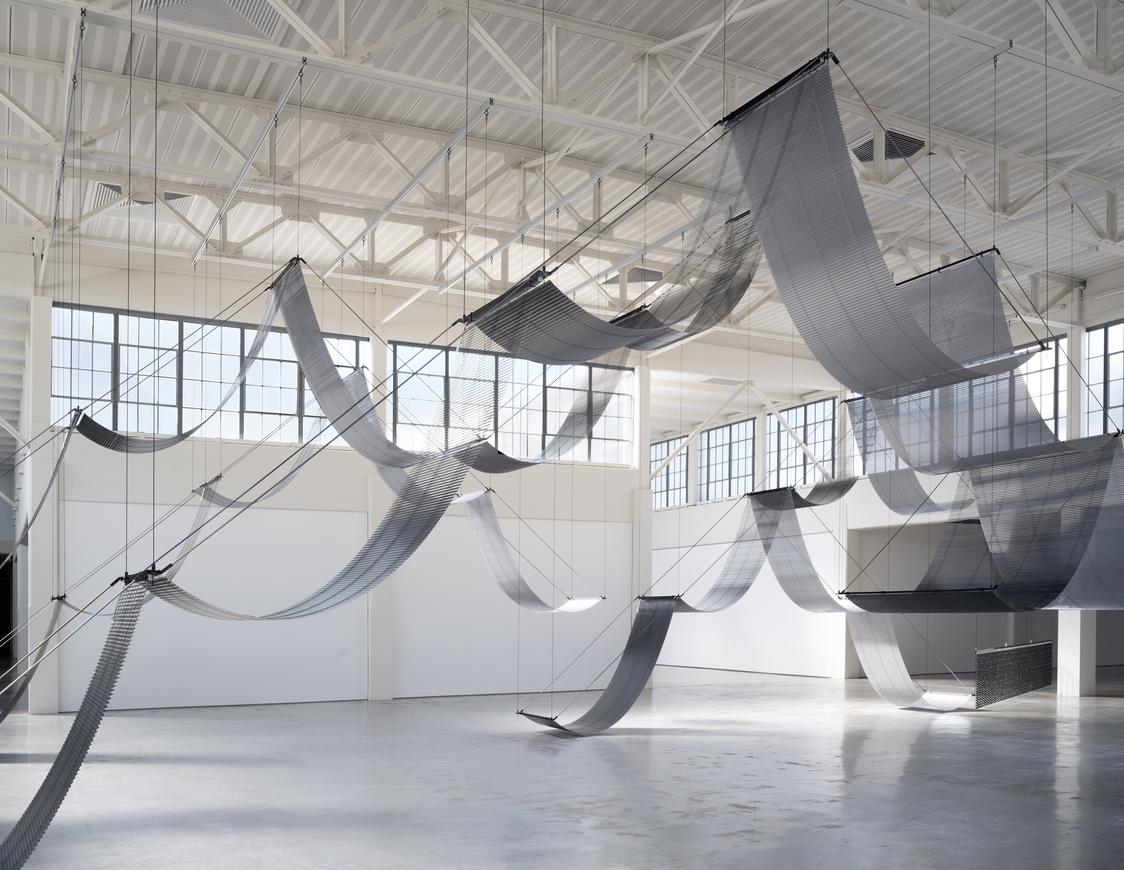
Dia Art Foundation has unveiled Through, a major long-term commission by South Korean artist Haegue Yang at Dia Beacon in New York's Hudson Valley, on view from October 10, 2026 through June 12, 2028. Yang is the first artist invited to conceive a new body of work spanning both floors of the museum's converted factory building, a commission the institution presents as a milestone in how its cavernous spaces can be activated.
The presentation gathers four principal works assembled from Yang's signature materials — Venetian blinds, metal louvers, bells, lights and sculptural forms — drawing on East Asian philosophy, myth and the experience of migration. Conceptually the installation takes cues from the music of Korean composer Isang Yun, whose life was shaped by exile and political violence. Rather than discrete objects, the works form one continuous environment in which the building itself acts as a participant.
Movement sits at the centre of the experience. Visitors pass between the museum's sunlit upper level and its darker lower galleries, where layered blinds shift between opacity and translucency and the relationships of space, sound and motion keep changing. Bells, filtered light and reflected surfaces turn the act of circulation into part of the artwork itself.
Curated by Jordan Carter with Min Sun Jeon, Through opens alongside presentations by Roni Horn, Lee Ufan and Kishio Suga at Dia Beacon. Dia's director Jessica Morgan has framed the project as extending the foundation's long history of inviting artists to respond to the scale, light and material presence of its spaces, reframed through Yang's attention to seriality, temporality and the dialogue between materials.