Profile·Paris
Art-School Students Join France's 'Gilets Jeunes' Day of Action as Marianne Gets a Yellow Vest
French art students took part in the nationwide "day of action" protests on 17 October, as a new youth movement — dubbed "gilets jeunes" — marched over teacher shortages, school repairs and the cost of living.
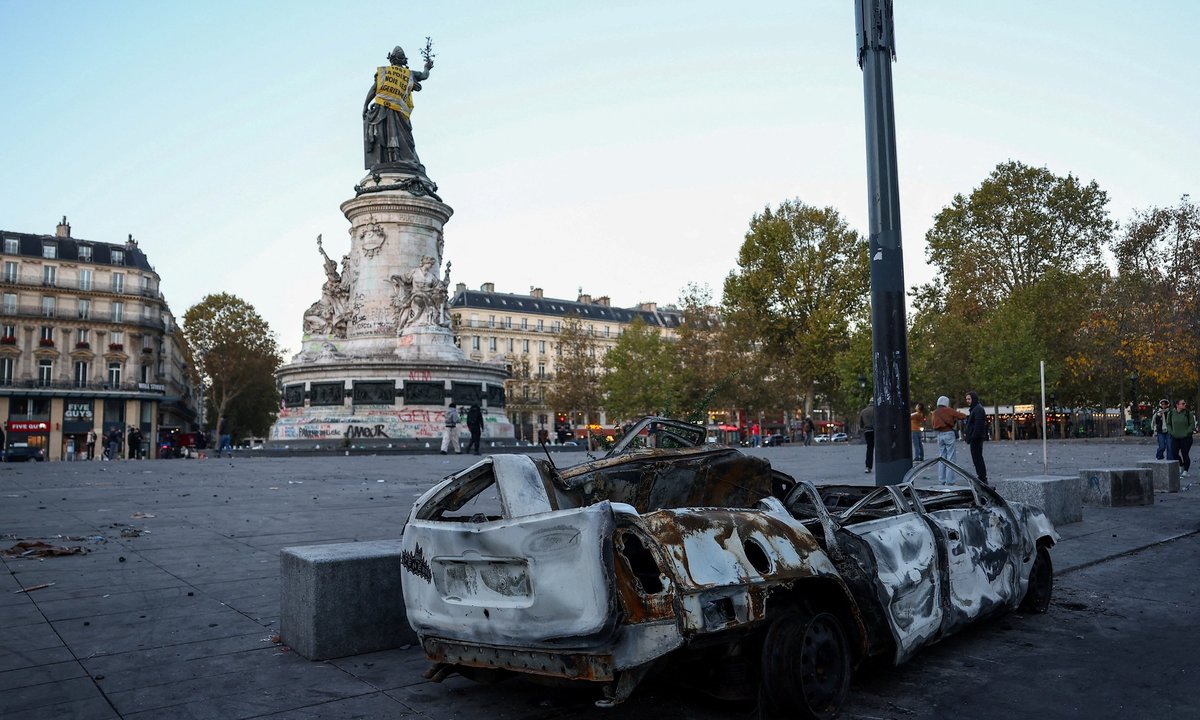
As France was rocked by explosive protests on 17 October, art-school students added their voices to a swelling youth movement. Demonstrators at the nation-wide marches in Paris scaled the 19th-century statue of Marianne in the Place de la République, dressing the allegory of French republicanism in a yellow vest — an echo of the 2018-20 gilets jaunes movement. The vest was emblazoned with the slogan "2026, the police mutilates high-schoolers", underscoring the widening rift between France's establishment and its young people.
Activists and commentators have begun using the moniker "gilets jeunes" (young vests) to describe the new school-pupil and student movement. Their demands are both immediate and all-encompassing: more teachers, repairs to school buildings, and an end to Parcoursup, the online platform introduced in 2018 to allocate university places, which pupils say produces unfair selection. Media outlets trace the trigger to protests at the Lycée Antoine-de-Saint-Exupéry in the Parisian banlieue of Créteil in mid-September, though pupils in the overseas territories of Guyana and Mayotte had begun protesting in late August.
The day of action followed weeks of mobilisation that began last month in high schools in Paris's working-class northern suburbs. The weekend's events then escalated, with clashes in several cities leading to looting, property damage and more than 2,000 arrests.
The unrest is already reverberating through the French art world. Art Basel organisers sent a reassurance email to VIPs ahead of the fair's Paris edition, installing anti-ram barriers and around-the-clock security patrols at the Grand Palais, and a Sunday opening of Stan Douglas's exhibition at the Jeu de Paume was cancelled as a precaution.