Exhibition preview·New York
When the access machine broke down, a Pioneer Works installation made its point
Finnegan Shannon's 'There's no me without you' at Pioneer Works runs a 12-foot conveyor belt carrying touchable objects, seating, masks and descriptive audio — and when the belt malfunctioned, the breakdown itself illuminated the show's argument about fragile systems and disabled bodies.
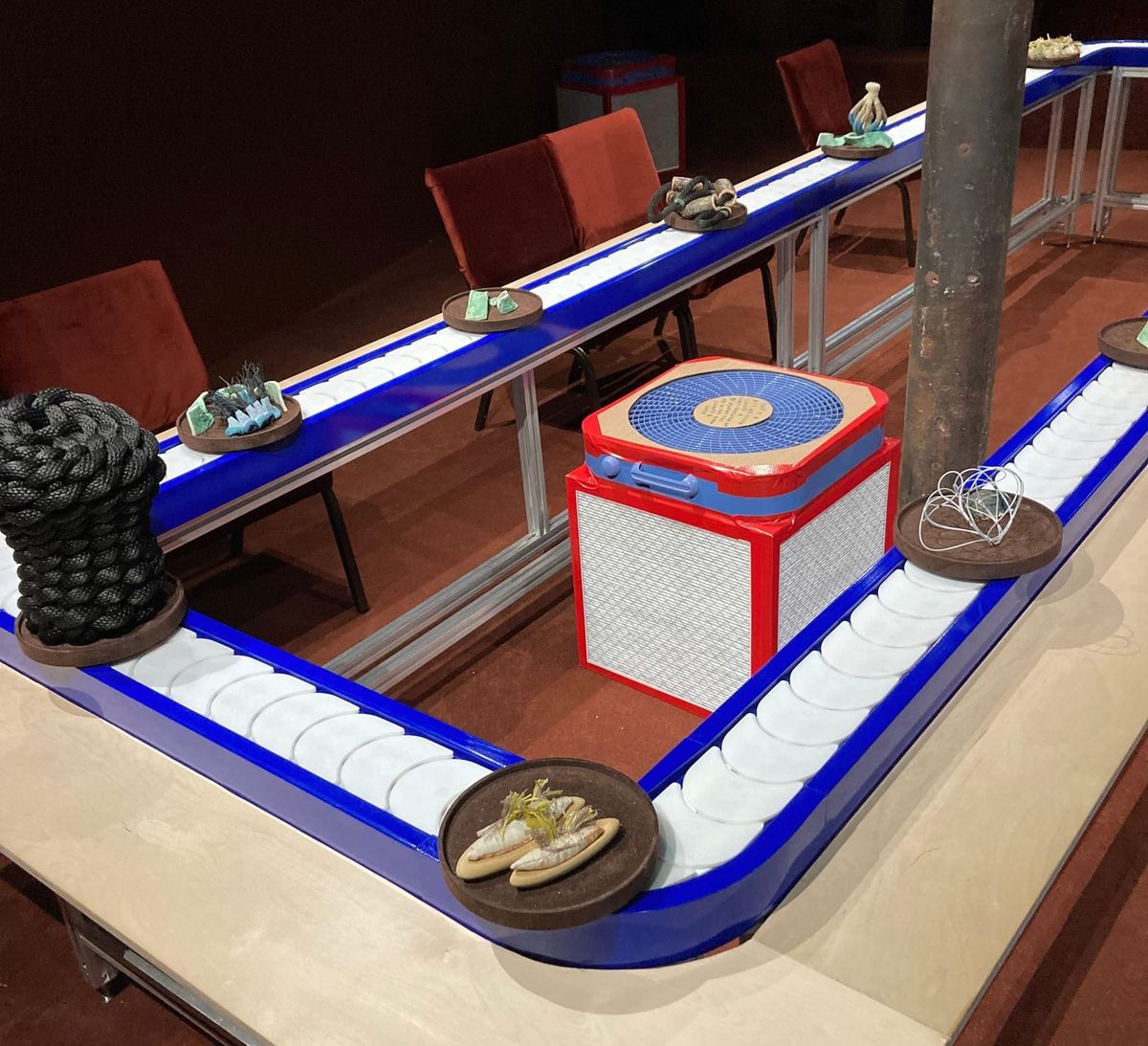
Finnegan Shannon's installation at Pioneer Works, titled There's no me without you, treats access as the artwork itself. At its centre sits a 12-foot-long square conveyor belt, arranged like a sushi conveyor in a maroon-carpeted room, carrying objects that visitors are invited to pick up, handle and use. The belt carries plush chairs and open spaces for people who cannot use the seating, alongside masks, accessible text, hand sanitizer, do-it-yourself air purifiers and descriptive audio. Together, these elements set out Shannon's vision of an equitable, gentle way of engaging with art, in which comfort and access are designed into the experience rather than added afterwards. Three artists are presented across the run. In the first month, Ariana Martinez places small objects in dishes on the moving display for visitors to touch: ceramic strips, masses of rope and other tactile, fidget-like pieces that reward close handling. The installation's argument was sharpened by an accident. When the conveyor belt malfunctioned, the breakdown itself became revealing. A work about the fragility of systems and what their failure costs disabled bodies suddenly offered a live demonstration of its own theme, as visitors encountered the gap that appears when the mechanism built to deliver access stops working. Rather than undermining the show, the jam turned a working display into a test of its own premise. Shannon's practice has long made the labour of access visible, from seating that invites rest to sensory provisions that anticipate different bodies. Here, the moment the system stalled showed how much of that care is infrastructure, and how quickly its absence is felt.