Profile·Global
Elizaveta Porodina photographs beetles and butterflies in radiant insect portraits
Fashion photographer Elizaveta Porodina turns her luminous, saturated style to insects — beetles, butterflies and mantises — in a series commissioned by the climate publication Atmos around biomimicry, also featured in her new Prestel monograph "Found Dreams."
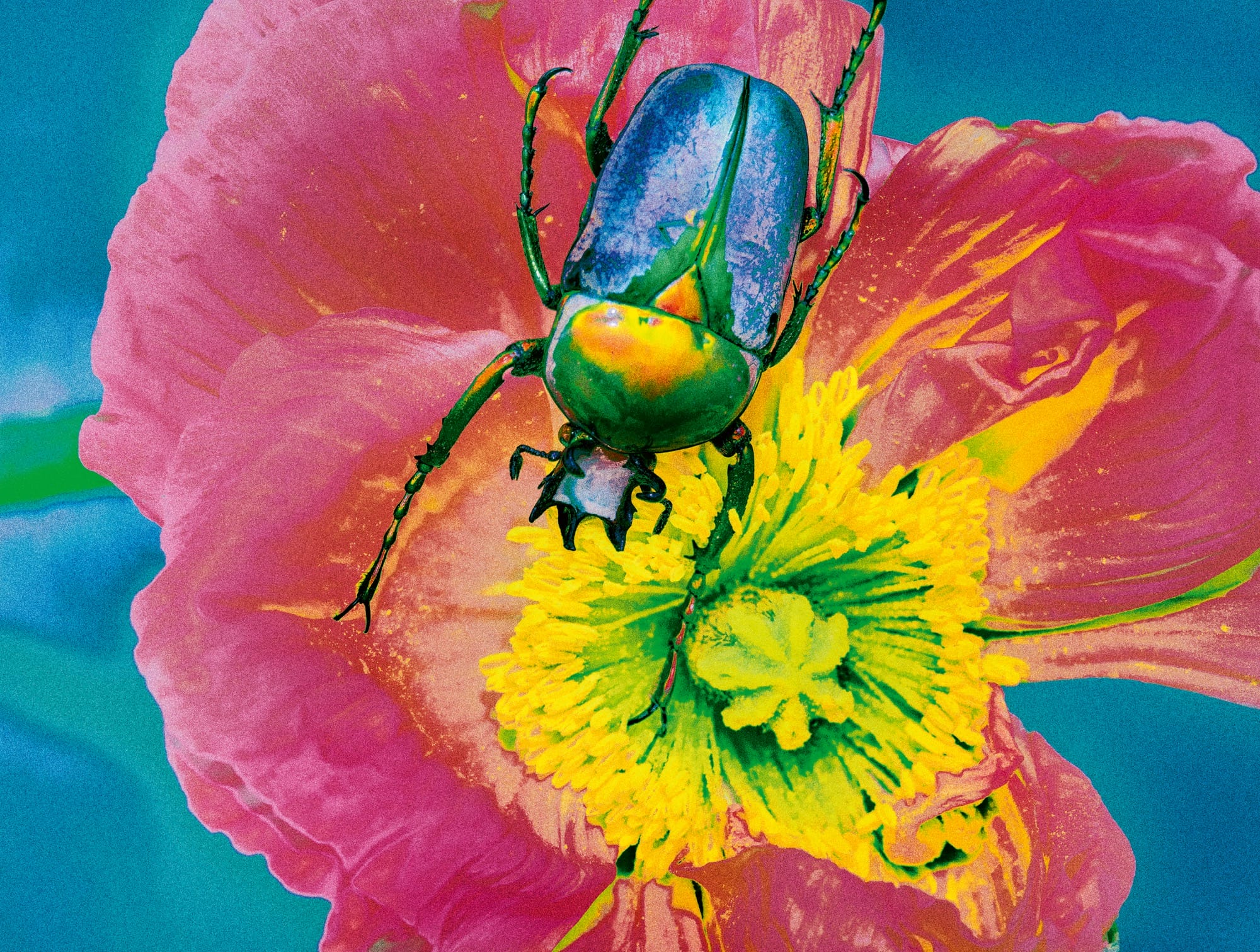
Elizaveta Porodina is best known for luminous, saturated portraits made with legacy magazines and fashion houses, but her lens has lately turned to far smaller subjects. Commissioned by the climate-focused publication Atmos, the photographer has produced a radiant series of insect portraits — beetles, butterflies and mantises rendered in her signature ethereal style, glowing against rich color fields as if they were couture models. The series is built around the concept of biomimicry and accompanies a feature on Janine Benyus, the biologist who coined the term. By presenting insects with the same care usually reserved for human sitters, Porodina's images argue for the design intelligence of the natural world: the iridescence of a beetle's shell or the architecture of a mantis becomes a lesson in form worth studying, not just admiring. Several of the portraits also appear in Porodina's new monograph, "Found Dreams," edited by Nadine Barth and released by Prestel. The book places the insect work — including images such as "The Magical Dream," "The Return" and "The Threshold Dreams" — alongside her more cinematic fashion imagery, tracing a single sensibility across wildly different scales of subject. Several of the portraits also appear in Porodina's new monograph, "Found Dreams," edited by Nadine Barth and released by Prestel. The book places the insect work — including images such as "The Magical Dream," which first ran in Atmos in May 2025, alongside "The Return" and "The Threshold Dreams" — next to her more cinematic fashion imagery, tracing a single sensibility across wildly different scales of subject. The sequencing suggests that the photographer's fascination with surface, texture and metamorphosis was always leading here, to creatures whose bodies are already works of design. The project extends a career-long interest in transformation and dream states into the realm of entomology. Where Porodina once used elaborate styling to turn models into mythic figures, she now finds the mythic already present in a butterfly's wing.