Museum report·Luxor
3,500-Year-Old Egyptian Dog Finally Gets Its Name Back: Duaty, 'He-of-the-Underworld'
A researcher using modern digital imaging has read the previously undecipherable name of a dog painted in a 3,500-year-old Theban tomb, the first known dog name to carry an epithet of the god Anubis.
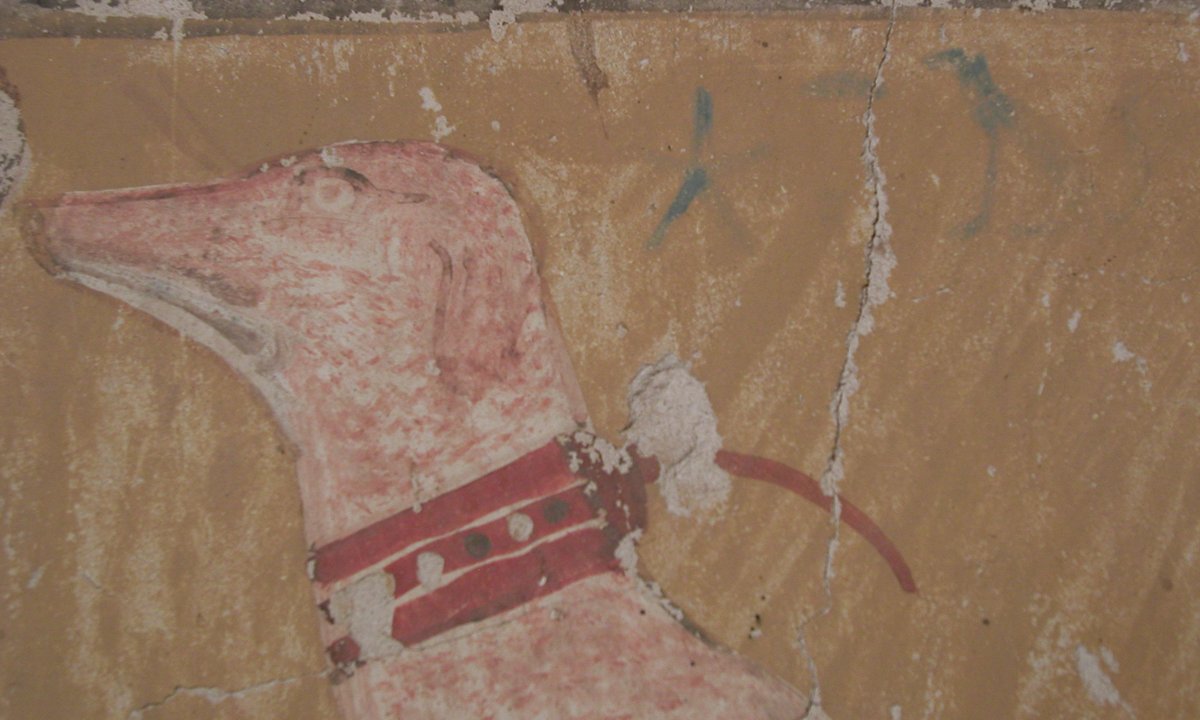
A dog painted on the wall of an Egyptian tomb some 3,500 years ago finally has a name again. The animal, one of three dogs depicted in the tomb of a nobleman called User in a necropolis at Luxor, has been identified as Duaty, a name that translates as "He-of-the-Underworld" and that carries an epithet of Anubis, the canine-headed god of the dead.
The identification was made by Chelsea Kaufman, an archaeologist at Johns Hopkins University in the United States, whose findings have been published in The Journal of Egyptian Archaeology. Earlier Egyptologists had studied the tomb but had been unable to read the dog's name without the help of modern digital imaging software, which revealed hieroglyphs that had resisted conventional reading.
Kaufman described the name as entirely unique among the known corpus of dog names from ancient Egypt. It is the first recorded instance of a dog being given an epithet of Anubis, a detail that raises fresh questions about the place dogs held in Egyptian society and about the relationship between the animals and the god associated with funerary ritual.
The tomb lies around 500 kilometres south of Cairo, in a burial ground that has been investigated over many years. The discovery shows how much can still be recovered from familiar monuments when new imaging techniques are applied to inscriptions that previous generations of scholars could not decipher.