Profile·Taipei
Taiwan calligraphy master Du Zhonggao dies at 77
Du Zhonggao, one of Taiwan's most admired calligraphers and a scholar of ancient Chinese scripts, died in Taipei on 28 October at the age of 77, leaving a body of work that moved from strict classical discipline to a freer, Zen-inflected style.
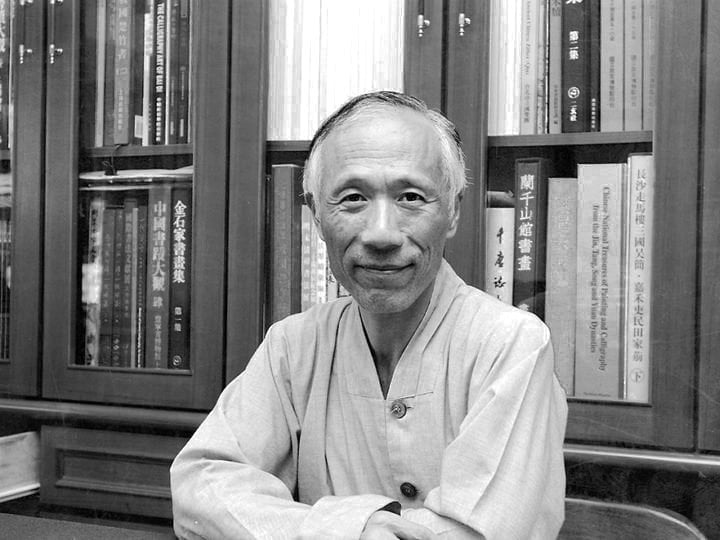
Du Zhonggao, a calligrapher regarded in Taiwan as a master of every major script, died on 28 October at National Taiwan University Hospital in Taipei. He was 77. Born in Changhua in 1948, Du built a career that joined deep scholarship in ancient Chinese writing with a distinctive, evolving brush style, and he became a central figure in the island's calligraphy world.
Du studied Chinese literature at National Taiwan Normal University and began learning calligraphy and painting as a young man. He was guided first by Lu Foting and later became a student of Wang Zhuangwei, joining the circle known as Wang's seven disciples. His early promise was confirmed when he won first prize in calligraphy at the Taiwan Provincial Art Exhibition in 1976, at 28, and again in 1981, earning permanent exemption from review. In 1982 he received both the Zhongshan Literary Award and the Wu San-lien Literary Award for calligraphy.
His practice was grounded in research. In 1987 he enrolled at the University of Tsukuba in Japan, completing a master's degree in 1990 with a thesis on the Shuihudi Qin bamboo slips, and in 2001 he earned a doctorate from National Taiwan Normal University with a study of corrupted forms in the Shuowen seal-script dictionary. Early in his career his brushwork was rigorous and classically poised, but after the age of 40, influenced by Zen Buddhism, he embraced imperfection and a looser, more spontaneous manner. He often described his approach through martial arts, saying his brush moved like a fist, turning force into softness.
Du also pushed calligraphy in new directions. In 1998 he proposed a biennial devoted to both traditional and experimental calligraphy, and the first edition opened the following year with the support of the Ho Chuang-shih Calligraphy Art Foundation. In 2017 the Sun Yat-sen Memorial Hall held a retrospective marking his seventieth birthday, for which he donated the work Tianxia Weigong, or The World Is for All. He later took part in revising Taiwan's high-school Chinese curriculum, arguing that classical Chinese should stay compulsory.