Exhibition preview·New York
41 Artists Try to Make You Laugh in a Two-Campus Show on Humour in Contemporary Art
Does This Taste Funny?, a sprawling two-venue exhibition at Lehman College and Sarah Lawrence, presents 41 artists using comedy, from the absurd to the cringe, as a serious artistic device.
What makes art funny, and why take a joke seriously? A sprawling exhibition across two New York campus galleries, Does This Taste Funny?: Humor in Contemporary Art, proposes comedy as a potent artistic device rather than a diversion. On view at the Lehman College Art Gallery in the Bronx and the Gallery at Heimbold Visual Arts Center at Sarah Lawrence in Bronxville, it gathers 41 artists, organised by co-curators Melissa Brown, an artist and professor at Lehman, and John O'Connor, who chairs the visual and studio arts programme at Sarah Lawrence.
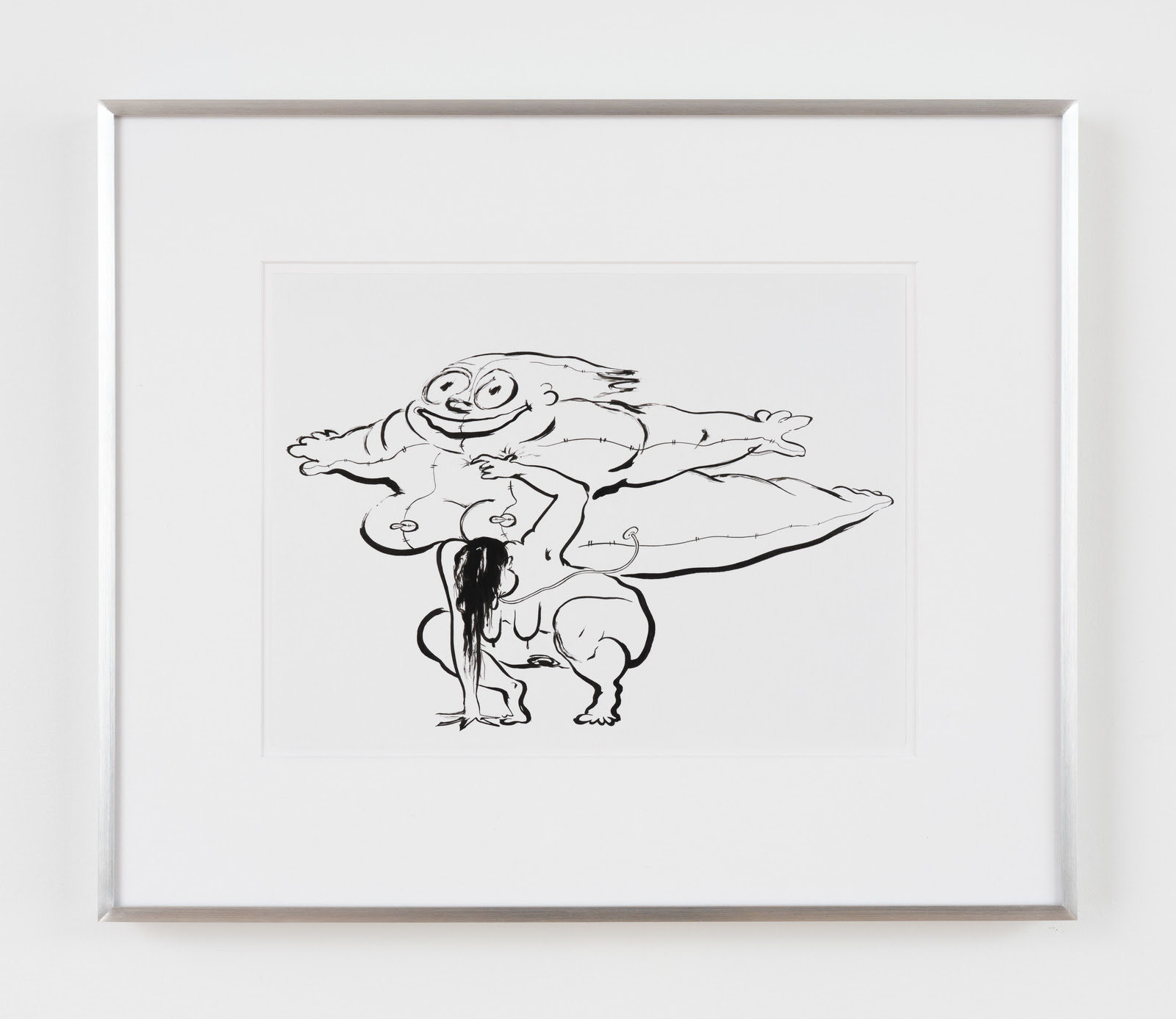
The curators sort humour into tones, absurd, cringe, slapstick and ironic, and let those tones organise the hang. The roster runs from museum-collection figures such as Ray Johnson and Cindy Sherman to established cartoonists Roz Chast and Aline Kominsky-Crumb, and on to contemporary artists such as Ebecho Muslimova. Works include Peter Saul's Life Is Tuff (2023), Tony Matelli's drooping bronze Veg Man (2008) and Jill Danenberg's 2024 accordion book Underground Comic, on the frictions between veganism and feminism. The oldest piece is Karl Wirsum's 1964 drawing Untitled (Study for Blue Tattoo).
Newer work keeps the joke current. Kristen Mills's It IS Cake from 2026 parodies the baking contest series with a film shot in a faux kitchen made entirely of brown cardboard, while John Vasquez Mejias's The Puerto Rican War, also from 2026, turns his novelette about anti-colonial revolutionaries in 1950 into puppet theatre. Jeremy Couillard's video game simulation Escape from Lavender Island (2023) and Robert DeJesus's surreal video The Survey (2024), in which a talking Olmec head speaks only without witnesses, extend the joke into digital form.
Humour here is participatory by design. As Brown puts it, laughter is an emotional response that works like a sneak attack, making people think in ways no press release can predetermine. O'Connor is even teaching a class on taking laughter seriously, setting students the task of making the funniest small sculptures they can. Voted on with smiley-face stickers, the winner so far is a realistic bust of Professor O'Connor himself, with a No. 2 pencil stuck halfway up his nose.