Policy brief·Antalya
Plastic Pours From a Giant Wooden Horse as COP31 Gets a Blunt Warning
Greenpeace and Danish artist Thomas Dambo unveiled a six-metre wooden Trojan Horse in Antalya during the COP31 climate summit, its belly trapdoor opening to pour out plastic waste as a protest against fossil-fuel driven plastic expansion.
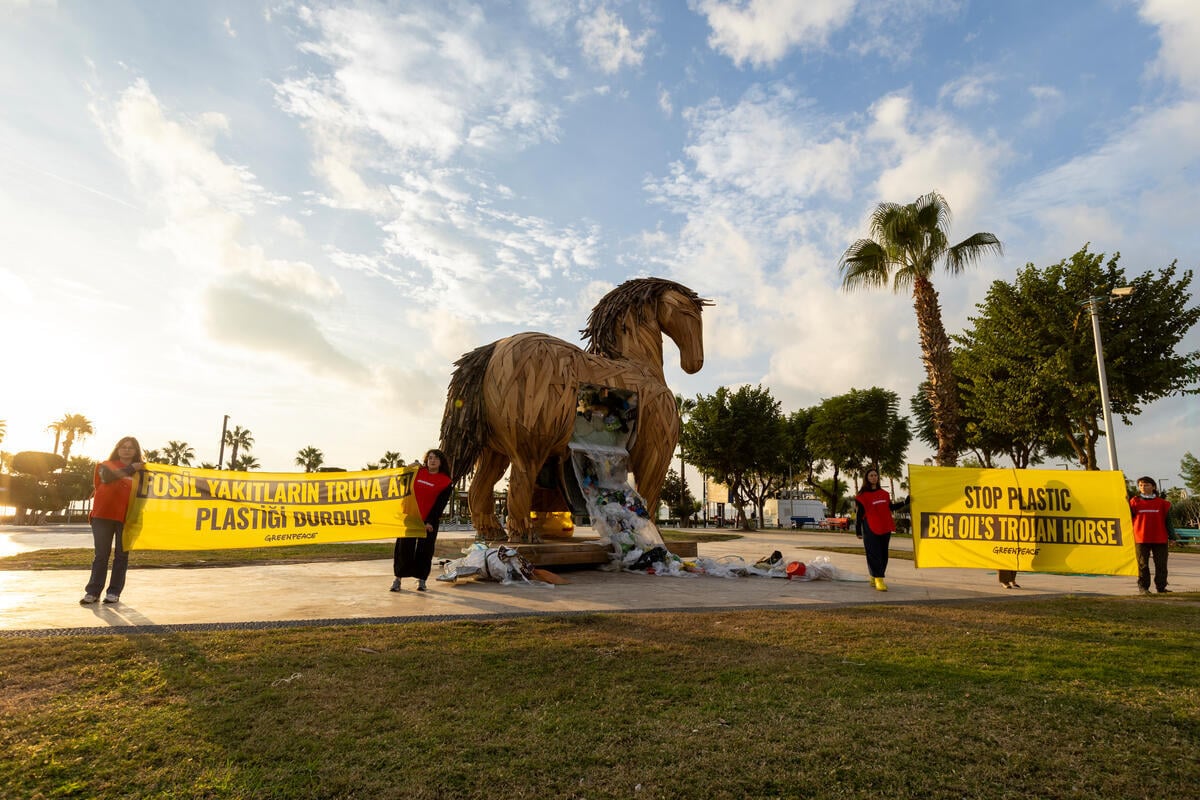
A giant wooden horse appeared outside the municipal offices in Konyaalti, Antalya, on 13 November, as Greenpeace International staged one of the most theatrical protests of the COP31 climate summit. Built with Danish artist Thomas Dambo, the six-metre-high, four-metre-wide structure carried a blunt message for the negotiators gathered in the Turkish coastal city: plastic, the campaigners argue, is the oil industry's Trojan Horse.
The horse's belly held a trapdoor. When it opened, mounds of plastic refuse cascaded onto the pavement below, while demonstrators with banners looked on and passers-by stopped to film the scene. Dambo, known for large sculptures made from salvaged wood and discarded material, said he builds only from recycled materials and waste to force people to confront how much society overproduces. Greenpeace said the installation was designed to show how petrochemical companies are using rising plastic production to extend their dependence on oil and gas and protect their profits.
The action was timed ahead of negotiations on a Global Plastics Treaty scheduled for March 2027. Campaigners want leaders at COP31 to take on the fossil-fuel interests behind plastic rather than treating pollution as a waste-management problem alone. Konyaalti mayor Cem Kotan, who attended the unveiling, said the display sent a resonant appeal to the dignitaries meeting in Antalya and to audiences watching around the world.
Local sanitation teams later cleared the spilled plastic from the street. Greenpeace said photographs and video of the action were being distributed through its media library, and the horse remained on display outside the municipal offices as the summit continued.