Museum report·Venice
The Man Who Taught Murano's Glassblowers to Work with Picasso and Ernst
The Peggy Guggenheim Collection opens an exhibition on Egidio Costantini, who from 1952 persuaded artists including Picasso, Ernst and Fontana to work with Murano's master glassblowers, with more than 100 works on show.
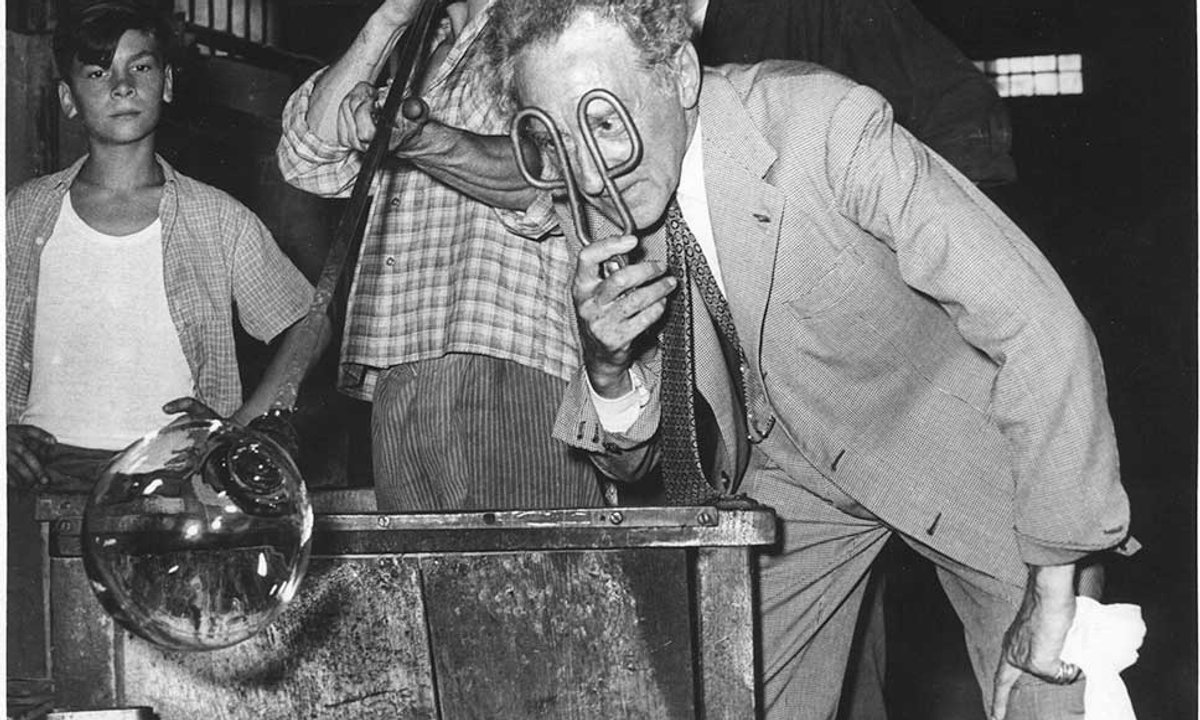
A new exhibition at the Peggy Guggenheim Collection in Venice tells the story of the man who persuaded some of the twentieth century's greatest artists to work with Murano's master glassblowers. Fucina degli Angeli: Peggy Guggenheim and 20th-Century Artistic Glass, which opens on 14 November and runs until 29 March 2027, brings together more than 100 works in eleven rooms.
Its subject is Egidio Costantini, who was born in 1912 and died in 2007. In 1952 he had the idea of inviting contemporary artists to design works that Murano's glassmakers would execute, and in 1955 he founded the Fucina degli Angeli gallery, its name, meaning furnace of the angels, suggested by Jean Cocteau. Over the following decades Costantini acted as interpreter between more than 100 artists and the furnaces, translating drawings and sculptures into glass.
The exhibition, curated by Cristina Beltrami, includes work by Max Ernst, Lucio Fontana, Hans Arp, Cocteau, Alexander Calder, Fernand Léger and Pablo Picasso, among others. Peggy Guggenheim was among the gallery's earliest and most loyal supporters, and her purchases helped keep it alive. The show also draws on the Fucina's archives, which have never before been studied in depth.
For Venice, a city whose glass industry is both its pride and its most fragile inheritance, the exhibition is a reminder that Murano's craft survived the twentieth century not by standing still but by opening its furnaces to outsiders, and that one determined impresario could change what glass could be. It is also, quietly, a tribute to the collectors and curators who kept the Fucina's story alive long enough for its archives to be opened at last.