Museum report·New York
Four Nooka watches by Matthew Waldman enter Cooper Hewitt's permanent collection
Cooper Hewitt, Smithsonian Design Museum has acquired four Matthew Waldman-designed Nooka wristwatches for its National Design Collection, tracing the brand's evolution from its 1999 Seiko license to independent production.
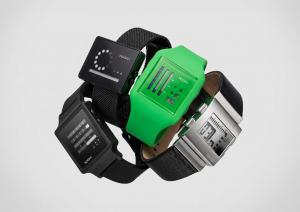
Cooper Hewitt, Smithsonian Design Museum has added four wristwatches designed by Matthew Waldman for Nooka to its permanent collection, honoring a body of work that rethought how time can be read through visual language, interface, and form. The four newly accessioned pieces are the Seiko model CAL.W524 Nooka wristwatch (1999), the Nooka ZUB Zen V (2007), the Nooka Zub Zen-H 20 (2009), and the Nooka Zirc (2008). Together they trace the brand's arc from its earliest licensed production with Seiko through to the independent products later manufactured by Nooka Inc., the company Waldman founded in 2004. The acquisition recognizes Nooka's contribution to design history through unconventional time displays that challenged analog watchmaking conventions and translated interaction-design thinking into wearable objects. Nooka grew out of Waldman's early work in user-experience design and a broader philosophy of universal communication expressed through his "Nookafesto," which held that purposeful design, futurism, and visual systems could communicate across languages and cultures. "Nooka was my attempt to communicate without words, transcending geopolitical and cultural borders using design as a multifaceted language," Waldman said. The brand, known for its tagline "The future should not look like the past," launched at MoMA design stores in New York and Tokyo and went on to wider lines of accessories and collaborations, finding an audience beyond design circles in fashion and music. Cooper Hewitt's National Design Collection holds more than 215,000 objects spanning over 30 centuries. The Nooka pieces join watches that are already held by institutional collections in Japan, England, and the Netherlands.


