Exhibition preview·Washington, D.C.
Hirshhorn Gives Bauhaus-Trained Texas Photographer Carlotta Corpron Her First Major Museum Survey, Decades Overdue
The Hirshhorn Museum has opened the first major retrospective of Carlotta Corpron, the Denton, Texas photographer whose abstract light experiments grew out of a Bauhaus lineage yet never reached the fame of her mentors.
Few photographers have moved between such influential circles while remaining so little known. Carlotta Corpron, who lived from 1901 to 1988, spent her career in Denton, Texas, far from the art capitals of New York and Paris, yet she worked as an assistant to László Moholy-Nagy and counted György Kepes among her mentors. Alfred Stieglitz, whom she met in New York, encouraged her abstract work.
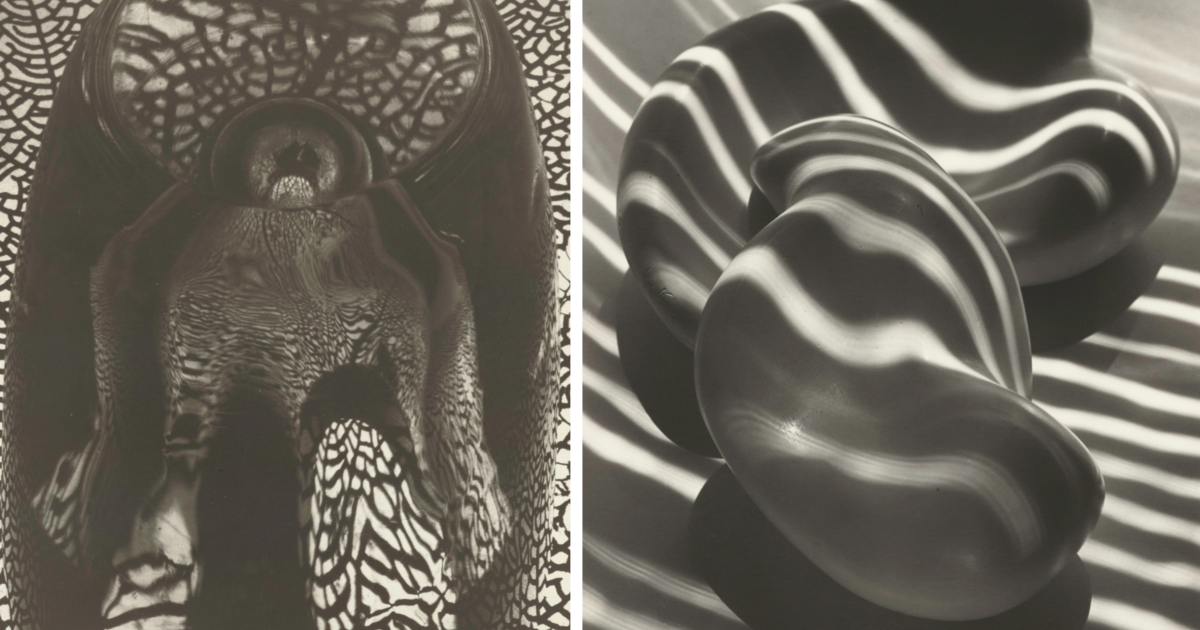
Her biography reads like a footnote to 20th-century modernism that keeps expanding. Born in Minnesota and raised partly in India, where her father worked as a missionary surgeon, Corpron moved to Denton in 1935 to teach at Texas Woman's University and stayed until her retirement in 1968. Between the late 1930s and the early 1950s she produced six bodies of work — including Nature Studies, Light Drawings, Light Follows Form, Space Compositions and Fluid Light Designs — all of them built around photography's relationship to light. She gave up the darkroom in 1955 for health reasons.
Now the Hirshhorn Museum and Sculpture Garden in Washington, D.C. is giving her the institutional recognition that eluded her in life. "Carlotta Corpron: Light Is a Plastic Medium" opened on October 16, 2026 and runs through March 14, 2027, drawing on 48 prints given to the museum by the late collector Herbert Lust, who believed Corpron was a major figure in avant-garde photography and hoped the museum would raise her profile. The curator, Betsy Johnson, has said she knew nothing of Corpron before the gift arrived.
The exhibition traces Corpron from early nature photographs to gestural light drawings and formal studies of light and form, accompanied by public programmes and a publication on the artist. Works by Corpron already sit in the collections of the Museum of Modern Art in New York and the Art Institute of Chicago, which gave her a solo show in 1953. This is the first time a museum has attempted to gather her practice whole.