Exhibition preview·Budapest
Budapest Show Revisits the Brief Montpellier Trip That Briefly Reconciled Van Gogh and Gauguin
A major Gauguin exhibition at Budapest's Museum of Fine Arts, running until 28 February 2027, centres on the two-day trip Van Gogh and Gauguin made to Montpellier in December 1888, when a visit to the Musée Fabre briefly eased the tensions of their life together in Arles.
A major exhibition on Paul Gauguin has opened at the Museum of Fine Arts in Budapest, built around a short journey the artist took with Vincent van Gogh in December 1888 that briefly repaired their strained friendship. The show, which runs until 28 February 2027, brings together 80 works by Gauguin and 70 by his contemporaries, with a total insurance value reported at 1.5 billion euros.
Gauguin had arrived in Arles that October to live and work with Van Gogh, but the two men soon began to quarrel while sharing the cramped Yellow House and a single small studio. As winter set in and outdoor painting became impossible, the atmosphere worsened. In mid-December Gauguin proposed an escape: a train ride 70 kilometres west to Montpellier, to spend time in the Musée Fabre, then famous for its collection of more than 800 paintings.
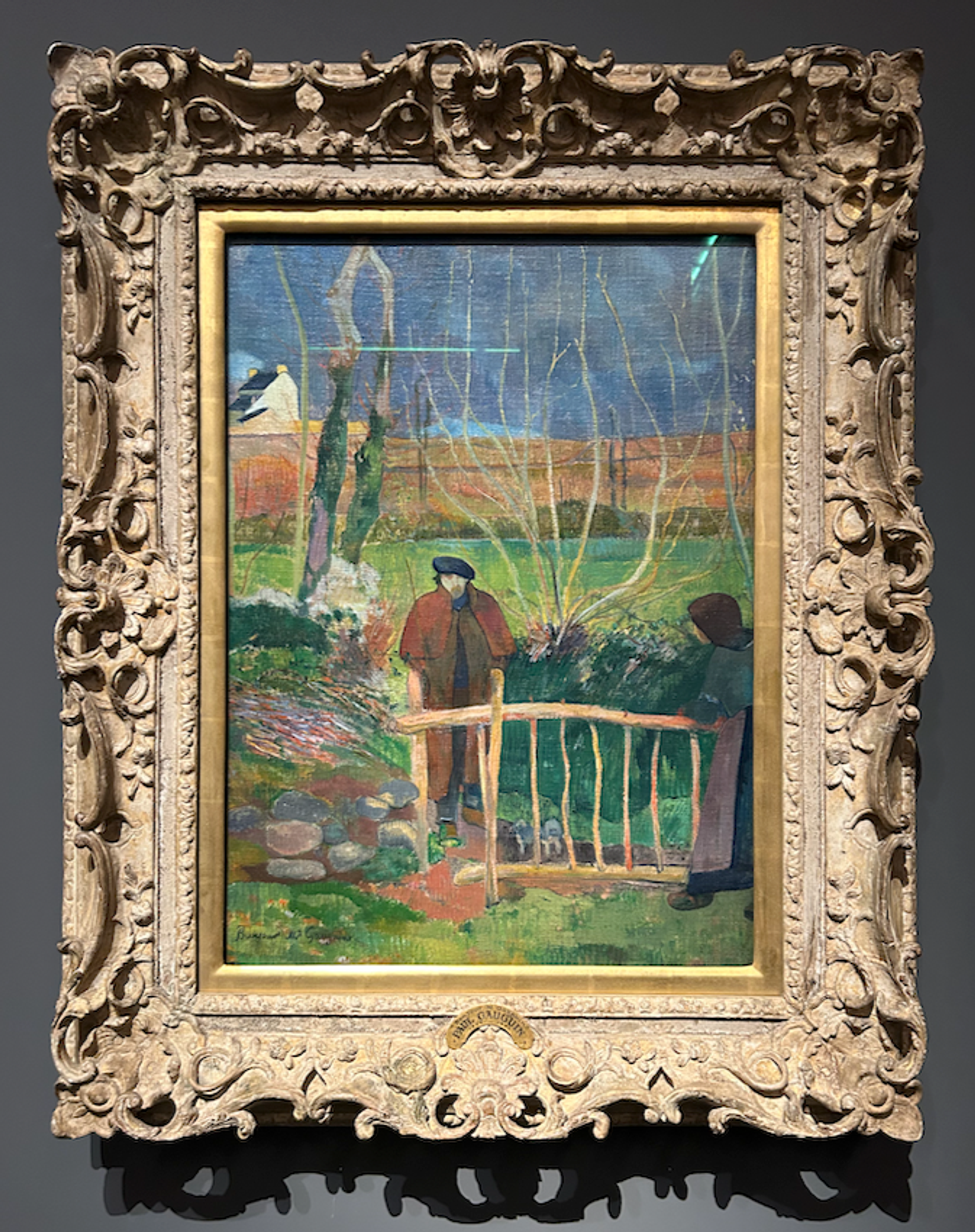
The visit left a lasting mark on both artists. Gauguin was struck above all by Gustave Courbet's 1854 canvas showing the painter greeting his patron Alfred Bruyas, and a year later, in the Breton fishing village of Le Pouldu, he painted his own version, placing himself at a gate facing a local woman. The Budapest show's curator reads the picture as a portrait of the artist as a solitary wanderer. Van Gogh, meanwhile, was drawn to Courbet's portraits, and the show argues that one self-portrait may have fed into his own Self-Portrait with Bandaged Ear and Pipe, painted a month later.
The two men returned to Arles in high spirits, with Van Gogh telling his brother Theo that they had been surrounded by magic in the museum. But the reconciliation was short-lived: four days later Van Gogh mutilated his ear, an act probably triggered by news of Theo's engagement, with the tensions of the shared household also playing a part. The Budapest exhibition also includes three Van Gogh works, among them a landscape from May 1888 and two rarely shown drawings, and the museum expects as many as 350,000 visitors.