Museum report·Ottawa
56 Glass Works and a New Curator's Post: Bronfman Gift Reshapes Canada's National Gallery
The National Gallery of Canada has received a promised gift of 56 modern and contemporary glass works from Charles Bronfman and his late wife Andrea Bronfman, together with an endowment that will create the museum's first curatorial post devoted to decorative arts and design.
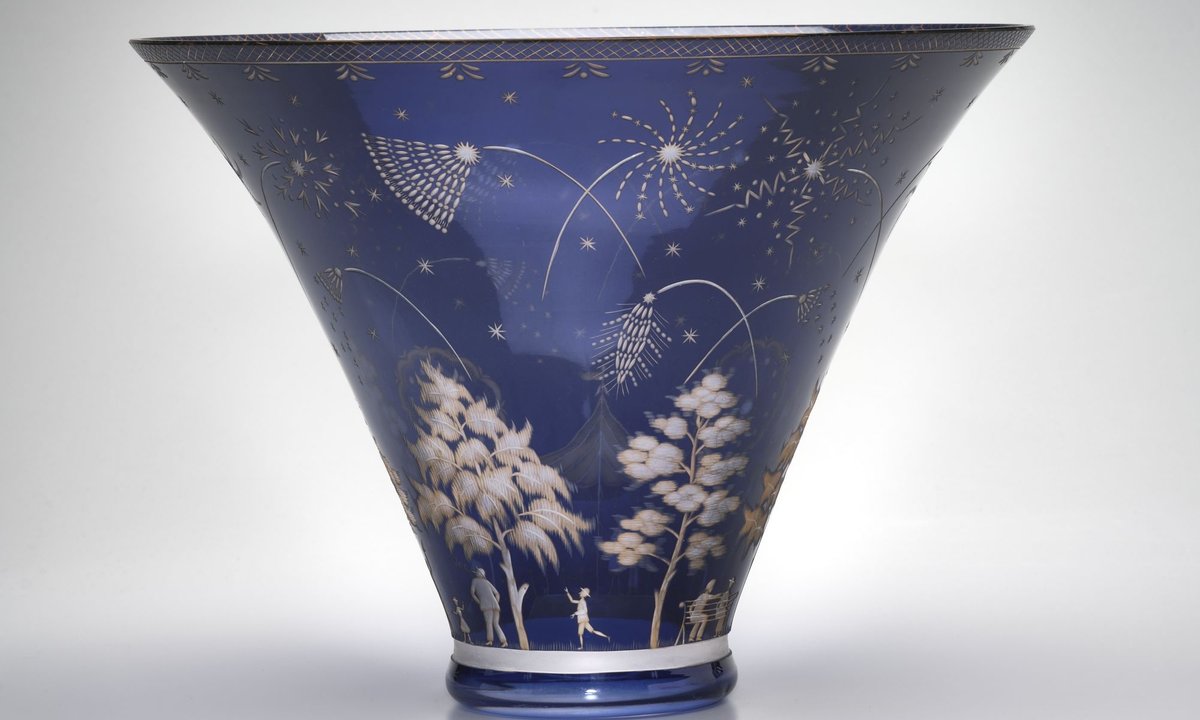
The National Gallery of Canada in Ottawa has received a promised gift of 56 modern and contemporary glass works from businessman and philanthropist Charles Bronfman and his late wife, Andrea Bronfman. Announced on 20 November, the donation also includes an endowment fund that will establish the institution's first curatorial position dedicated to decorative arts and design, a field the gallery says the gift will help it develop substantially.
The collection covers more than a century of experimentation with glass and features work by 29 artists from Canada, Europe, the United States and Asia, among them seven Canadians and seven women. It ranges from postwar studio glass by Harvey Littleton, Dale Chihuly and Lino Tagliapietra to contemporary pieces by Laura Donefer, Steffen Dam and Toots Zynsky, and includes windows by Frank Lloyd Wright and Louis Comfort Tiffany as well as a Tiffany Studios lamp. The works were made using blown, moulded, fused, engraved, sculpted and enamelled techniques.
A selection from the gift is already on display in the gallery's European galleries, where it remains on view through 30 April 2027. Rather than confining the pieces to a single dedicated space, the museum plans to show them throughout its galleries, so that glass is presented alongside other media instead of being treated as a separate category.
The donation opens a year of celebrations marking the Bronfman family's contributions to the arts in Canada. For the National Gallery, it marks a new chapter in collecting: the endowment gives the institution a curator focused on decorative arts and design for the first time, and the breadth of the gift, from nineteenth-century windows to recent studio glass, is intended to anchor that area of the collection for years to come.