Museum report·Kansas City
Forty Paintings, One Restless Abstraction: Barbara Takenaga's First Survey in a Decade Opens in Kansas City
The Kemper Museum of Contemporary Art in Kansas City has opened Barbara Takenaga: Awestruck, the artist's first comprehensive survey in nearly a decade, with 40 works from the early 2000s to the present, on view through 11 April 2027.
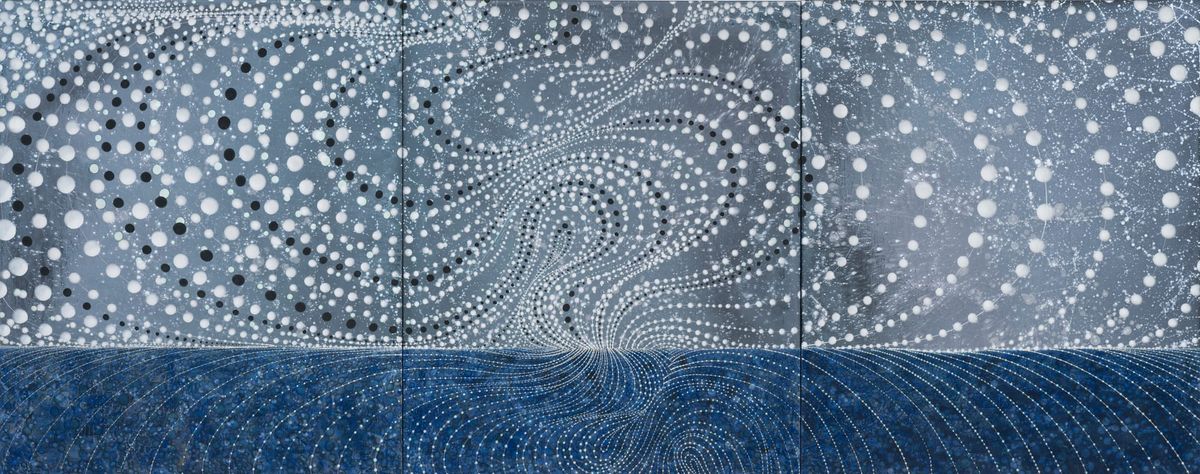
The Kemper Museum of Contemporary Art in Kansas City has opened the first comprehensive survey of Barbara Takenaga's work in nearly a decade. Titled Awestruck, the exhibition brings together 40 paintings spanning the artist's career since the early 2000s, including her most recent work, and remains on view through 11 April 2027.
Takenaga, born in 1949 in North Platte, Nebraska, is known for intricate, labour-intensive abstractions that play with scale, pattern and perception. The survey is organised around four themes: an attention to process, a deliberate confusion of scale, an embrace of illusion, and references to art history. Together, the organisers say, these approaches unsettle what viewers expect from a painting, inviting imagination and curiosity rather than quick recognition.
The artist herself describes the paintings as abstract but carrying implied stories: natural phenomena, imagined landscapes, microscopic or cosmic views, cross-sections of minerals, aerial maps of land, or explosions at the birth of the universe. Chance plays a central part in how the work is made, she has said, balanced against structure and order through painstaking, repetitive mark-making. The chance to look back across 25 years of work, she said, was a rare opportunity she was enormously pleased to take.
Works in the show are drawn from institutional and private collections across the United States, and the exhibition includes paintings made up to the present day, tracing how Takenaga has pushed her approach across ever larger canvases. The exhibition is organised by Jessica May, the Kemper's executive director, and independent curator Tae Edell.
Takenaga's patterned, jewel-like surfaces have earned her a devoted following among painters and collectors, even as her work has stayed outside the mainstream of headline-grabbing contemporary art. A survey of this scale offers a chance to measure how a single, disciplined visual language, built from dots, swirls and concentric forms, has developed over a quarter of a century without losing its sense of wonder.