Museum report·Barcelona
MACBA Opens Major Aurelia Munoz Textile Retrospective for Her Centenary Year
MACBA in Barcelona opens Aurelia Munoz: Beings on 5 November 2026, a five-decade survey of the Catalan textile artist with more than 60 large-scale fibre sculptures, nearly 200 drawings and a two-day international symposium.
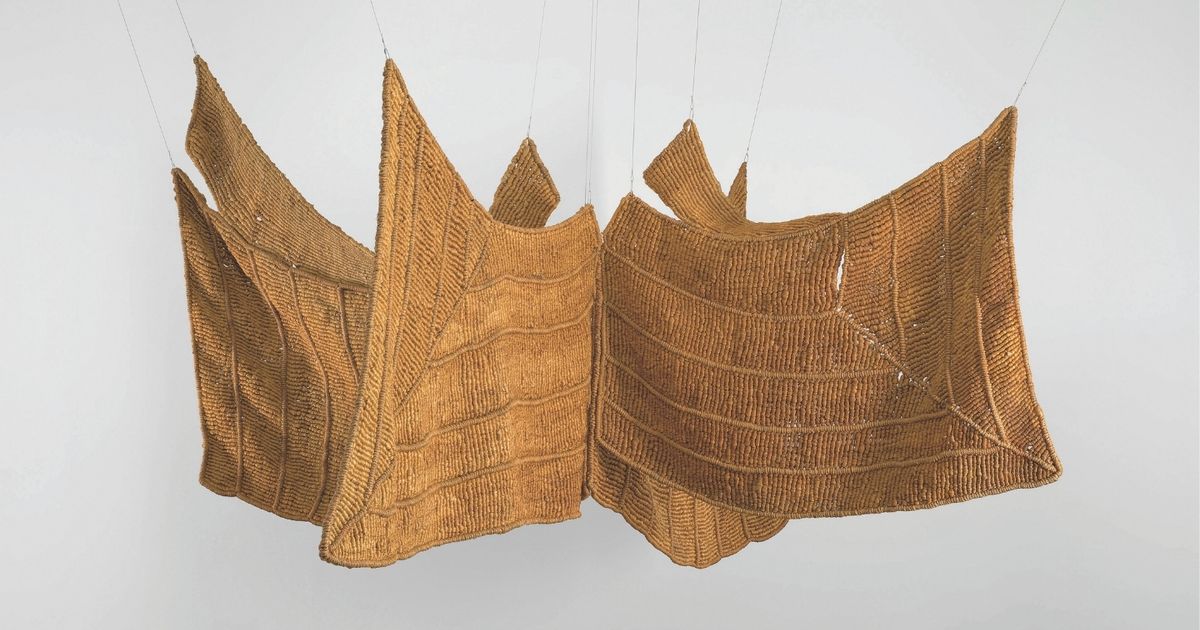
Barcelona's MACBA opens a large retrospective of Aurelia Munoz on 5 November 2026, tracing more than fifty years of work by an artist who turned weaving, knotting and embroidery into monumental sculpture. Titled Beings, the exhibition runs until 2 May 2027 and anchors a year of events marking the centenary of Munoz's birth in 1926. She died in 2011, having spent much of her career working outside the usual hierarchies that separated craft from fine art.
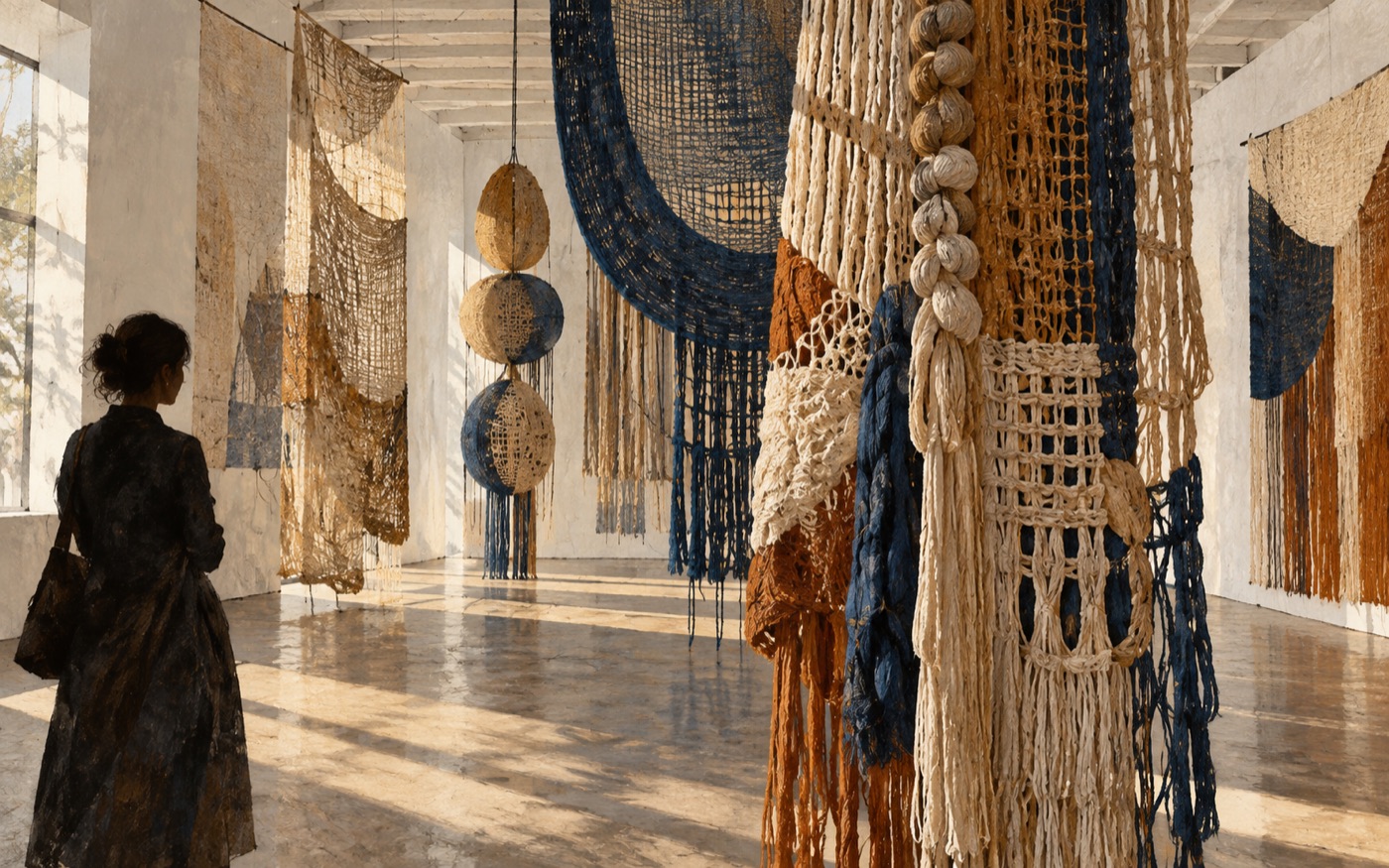
The show gathers over sixty large-scale macrame sculptures, embroideries and fibre works, together with nearly two hundred drawings and a selection of paper-based sculptures, many of which have rarely or never been shown in public. Munoz began with collage, sackcloth and embroidery in the 1950s and 1960s, then moved in the mid-1970s towards towering knotted structures, winged bird-kites and book-like forms suspended in the air. Her materials were humble — jute, sisal, cotton and thread — but the scale and ambition of the finished pieces placed her among the most distinctive European sculptors of her generation.
The exhibition is organised jointly by MACBA and the Museo Nacional Centro de Arte Reina Sofia in Madrid, where the same survey was shown earlier in 2026. It is curated by Manuel Cirauqui, Rosa Lleo and Silvia Ventosa Munoz through the einaidea research platform, working closely with the Aurelia Munoz Archive. A new publication accompanies the show, pairing reproductions of rarely seen works with essays and a revised chronology of the artist's career.
An international symposium, Resonance and Confluence, takes place at MACBA on 5 and 6 November, bringing together specialists in anthropology, textile history and media theory to examine Munoz's practice from several directions. Works by the artist are held by institutions including the Museum of Modern Art in New York, and the Barcelona presentation adds late drawings from her archive that were not part of the Madrid showing.