Exhibition preview·Taichung
Daito Manabe Opens First Overseas Solo Show in Taichung as a Living System
Japanese media artist Daito Manabe opens 'Relational Time – Life Beyond Simulation' at the Taichung Art Museum on October 3, his first major overseas solo exhibition, transforming three galleries into an autonomous, continuously evolving ecosystem.
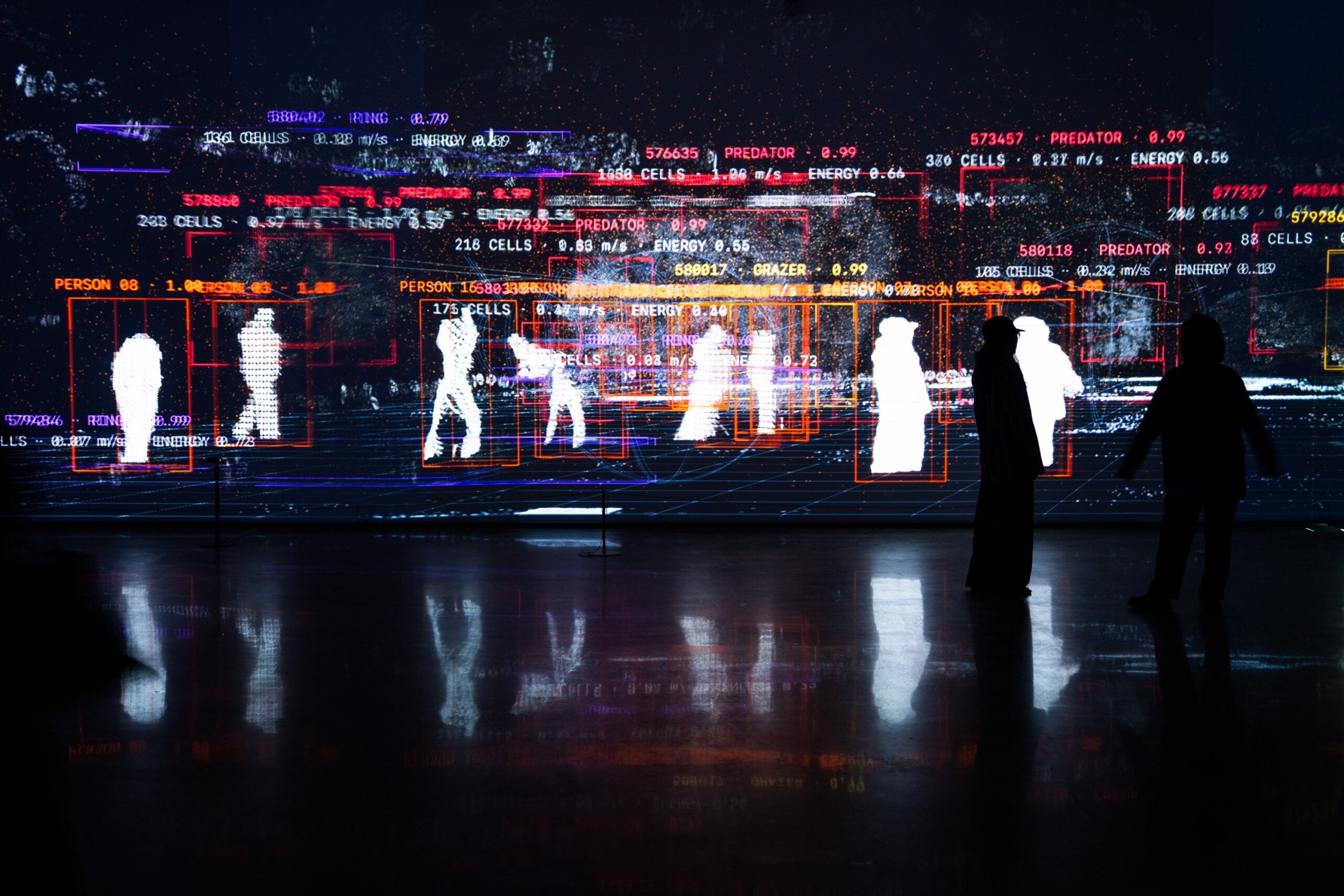
The Taichung Art Museum has opened the first major overseas solo exhibition by Daito Manabe, Japan's leading media artist, and it is less a display of objects than a living machine. 'Relational Time – Life Beyond Simulation,' curated by Hong Kong Microwave International New Media Arts Festival program director Kwong Ka-ling, opened on October 3 and runs through January 3, 2027, turning the museum's three galleries into an autonomous agent system in which every visitor's presence becomes a variable in the computation. At the October 2 opening, museum director Lai Yi-hsin framed the show as a break from static exhibition space: visitors get a continuous journey of bodily perception as sound, image, and space shift around them in real time. Manabe himself performed an opening-night audio-visual set inside Gallery A. The technical premise deliberately goes beyond the familiar interactive-art formula of waving a hand to trigger a visual response. The system's ongoing evolution is the artwork. Gallery A stages a microscopic artificial ecology of cells and resources, where fifteen AI agents with differing positions propose and critique resource-allocation schemes while cellular clusters move, ingest, and mutate under shifting conditions. Gallery B folds the audience into group evolution: sensors translate visitors' movement into forces that disturb an artificial-life world, while observer agents periodically read the system's history and adjust the environment to keep the world alive and diverse. Gallery C abandons linear time altogether, building a distributed sound field across the architecture. Manabe built a computational system from publicly released 2026 connectome data mapping the central nervous system of an adult male fruit fly, allowing the neural structure itself to operate. Visitor movement is converted into stimuli fed through thousands of neurons, emerging as timbre and light from 24 ceiling sound points and a four-sided central display — and as viewers respond to what they hear and see, their movement becomes new input, so the music and visuals keep generating themselves through the interaction. A dedicated website lets audiences follow the system's evolution even when the museum is closed, alongside workshops, audio-described tours, and accessible sessions for different audiences.