Exhibition preview·Global
Libyan artist Nour Jaouda on memory, migration and the homes in between
In an Art Basel interview published October 5, 2026, Libyan textile artist Nour Jaouda discusses how travel between Cairo and London, a 2023 return to Benghazi, and her grandmother's garden shaped her hand-dyed fiber installations, including the work she showed at Art Basel Qatar 2026.
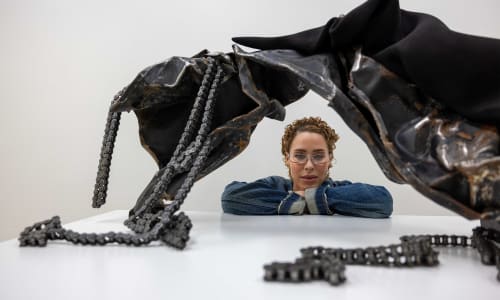
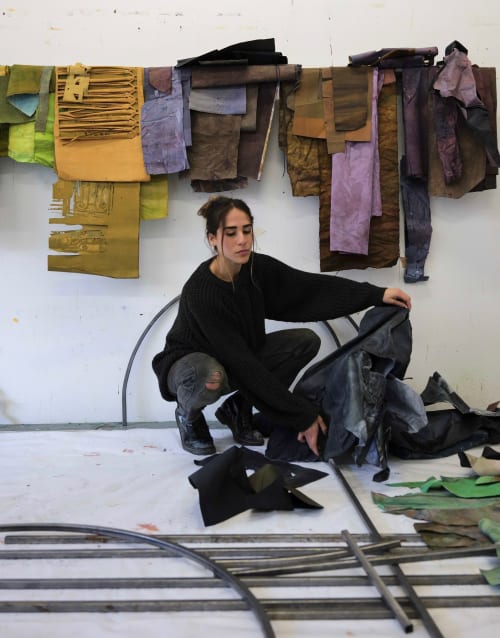
Libyan artist Nour Jaouda works in hand-dyed textiles and hanging fiber installations to explore how landscapes hold memory and how movement reshapes identity. In a new interview published by Art Basel on October 5, 2026, she reflects on a practice formed between Cairo and London, the two cities she now calls home, and on the journeys that have redirected her work. A pivotal moment came in 2023, when Jaouda returned to Benghazi for the first time in almost a decade. The visit became the seed of her research for the Venice Biennale 2024: her grandmother's garden, and in particular a decades-old fig tree she remembered from childhood, led her to investigate how plants anchor spiritual and ancestral connections to place. That inquiry translated into the tapestries she exhibited in Venice. Jaouda speaks of color as a language that crosses cultural borders, absorbing the chaos, dust and heritage of each place she inhabits, and of her process of deconstruction and remaking through décollage. When traveling, she says, the stillness she finds after disconnecting keeps her present, while her first pull in a new city is always toward its people. The interview is part of Art Basel's 'In Transit' series, produced in partnership with Qatar Airways. It also looks back on her contribution to Art Basel Qatar 2026, where her installation 'A House Between Two Houses' evoked a dwelling in the process of becoming, a space shaped by emotional subjectivity rather than fixed geography. For Jaouda, home remains deliberately unfixed: a condition of constant formation, built out of memory, absence and movement.