Museum report·Global
4 Million Public-Domain Images, One Search Box: Arkivism Opens the Museum Vaults to Everyone
Arkivism, a new search index launched this week, gathers more than four million public-domain artworks, illustrations, photographs and videos from the Smithsonian, the Met, NASA, the Library of Congress and other institutions, and lets anyone search them with a plain phrase.
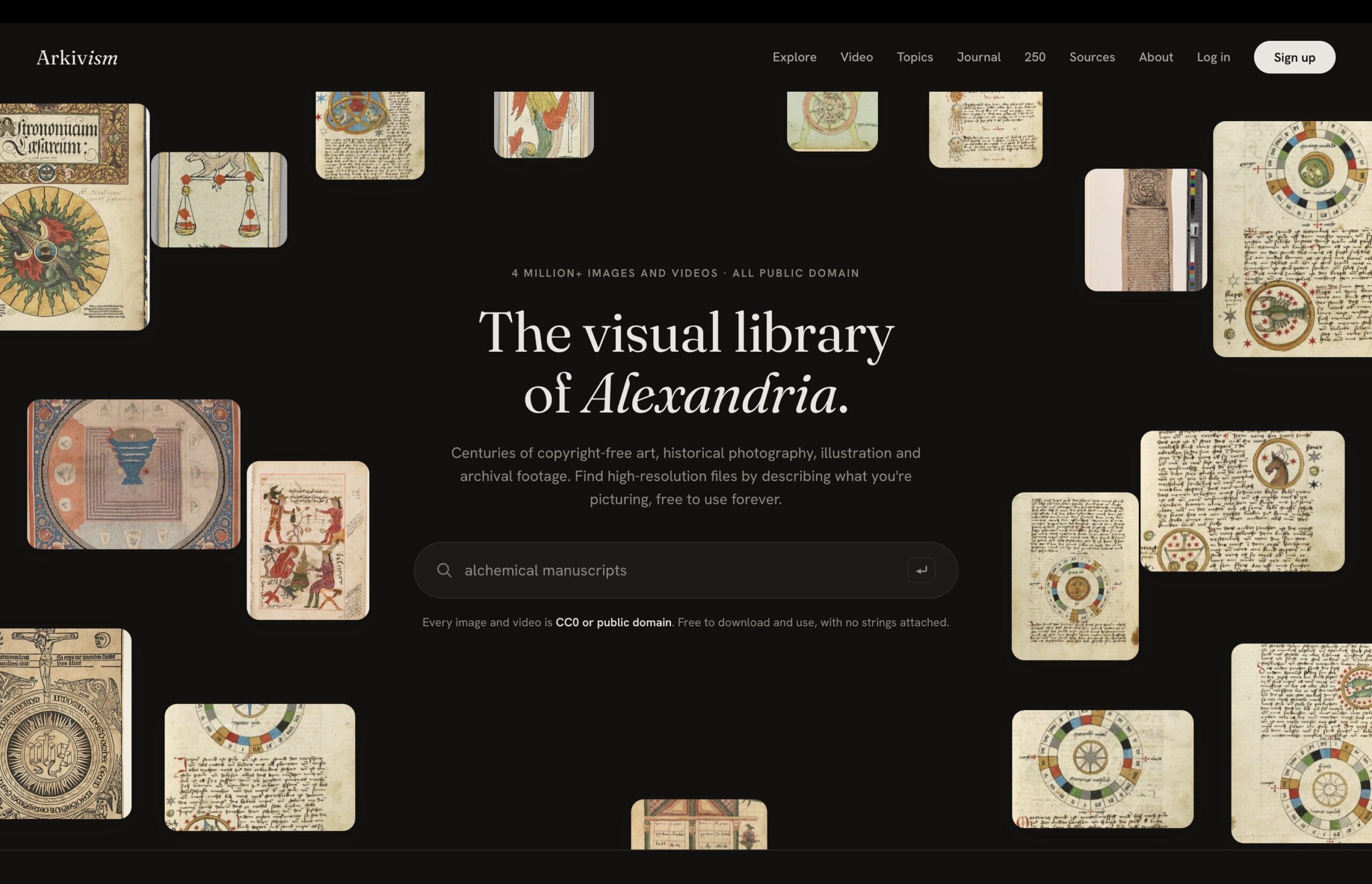
A drawing of a duck wearing a hat. A glimpse of Morocco in 1850. Footage of crowds celebrating in the streets. Arkivism, a new search and discovery tool for public-domain imagery, promises to find all of it with a single typed phrase, drawing on more than four million artworks, illustrations, photographs and videos held by museums and archives around the world.
The index pulls together material from the Smithsonian, the Metropolitan Museum of Art, NASA, the Library of Congress, the National Gallery of Art, the Rijksmuseum and dozens of other institutions, presenting it through the kind of plain-language searching that has become familiar from chatbots. Its creator describes the project as a visual library of Alexandria, a deliberately grand comparison for a catalogue that treats out-of-copyright culture as a shared resource rather than a set of locked filing cabinets.
The launch is framed as an accessible answer to generative image tools. Where those systems produce new pictures from training data, Arkivism points back to the originals, inviting users to browse the real thing. A recommendation feature means one painting can lead into a trail through centuries of art, with each suggested image opening another path through the collection.
Alongside the search engine, the project publishes the Arkivism 250, a ranked list of what it calls the greatest public-domain artworks. The combination of scale, simplicity and open access gives researchers, teachers and the merely curious a single doorway into holdings that were previously scattered across many separate institutional websites. The project was quickly picked up beyond its first coverage, with the design and culture site Kottke.org pointing its readers to the index within days of launch.