Art world report·Global
Amok Island paints Western Australia's native species across city walls
Street artist Amok Island, based in Fremantle, Western Australia, covers buildings with bright geometric murals of local flora and fauna, turning conservation into public art. Recent works include a 2026 leopard cat mural in Hong Kong and a South Perth piece addressing rodenticide bans.
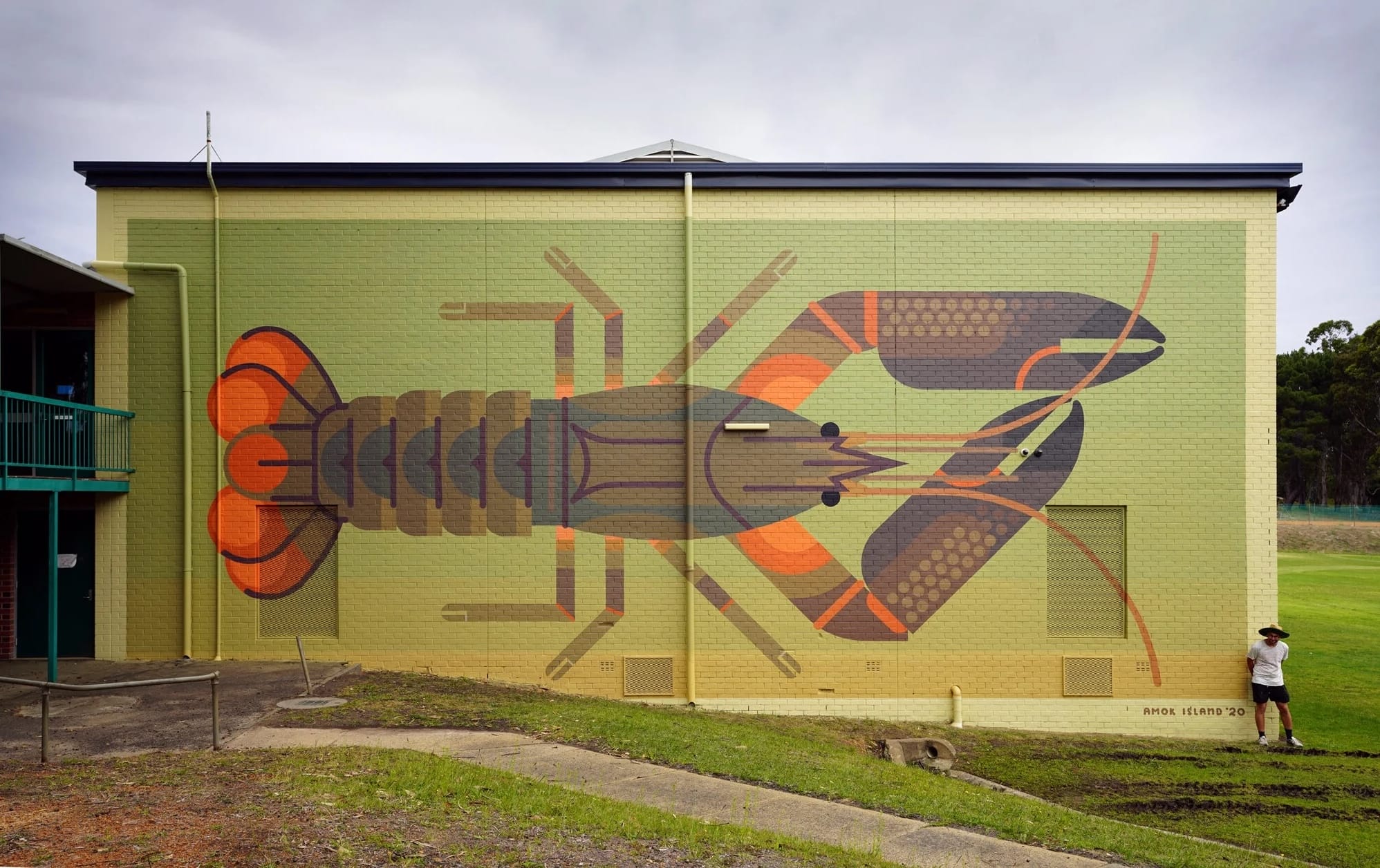
Born in Amsterdam and now based in Fremantle, Western Australia, the artist known as Amok Island has built a practice around a single urgent subject: the fragility of the earth's biodiversity. His large-scale murals, rendered in vivid geometric color, depict the mammals, crustaceans, flowers, and birds of the places where they are painted. Across his home state and beyond, migrating birds sweep across industrial infrastructure, flowers bloom on community buildings, and roosters, butterflies, and cats animate urban walls. Each image reflects creatures found in that region, offering passersby a portrait of the living things they might encounter nearby. The work doubles as a quiet argument for conservation. Recent pieces include 'Cherax destructor' (2026) in Collie, Western Australia, named for a native crayfish species; 'The banning of Second-Generation Anticoagulant Rodenticides' (2026) in South Perth, made for the NMBW Festival, which takes its title from a real-world policy fight over poisons that kill wildlife; and 'Leopard Cat' (2026) in Hong Kong. Earlier works include 'The Honey Eaters' (2021) in Ravensthorpe, 'Grevillea bipinnatifida' (2021) in Dwellingup, and 'The Last Swans' (2020) in Northam. The murals arrive at a moment when species are likely vanishing faster than science can document them. Thousands may disappear each year, accelerated by habitat loss, pollution, and climate change, even as initiatives like the Ocean Census keep cataloguing new marine life. Amok Island's walls meet that abstraction with something concrete and local: a specific bird, a specific flower, painted where the people who share its habitat can see it. By working at architectural scale on everyday buildings — a community hall, an overpass, an industrial shed — the artist treats public space as a gallery with no admission fee. The result is street art that functions as field guide, celebrating the beauty of nearby nature while underscoring how much of it is at risk.