Exhibition preview·Global
Alice Neel's Drawings of the 1949–51 Foley Square Trials Head to Auction
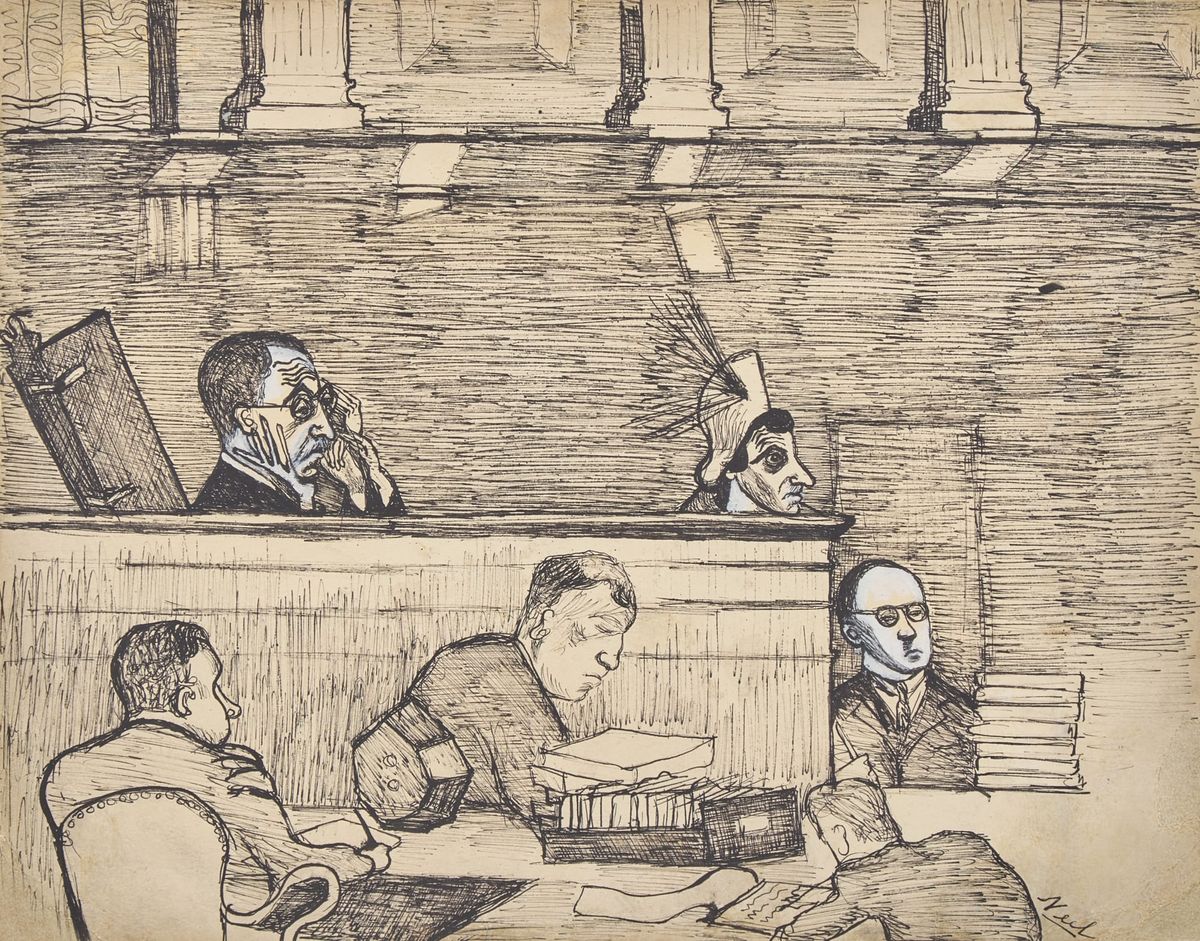
Drawings by Alice Neel depicting the McCarthy-era Foley Square trials of 1949–51, made while the Communist painter was on assignment for a Marxist magazine, are headed to auction as museums rethink how works on paper are shown.
Drawings by Alice Neel depicting the 1949–51 Foley Square trials are headed to auction, offering a rare glimpse of the painter in the role of courtroom witness. Neel made the works while on assignment for a Marxist magazine, sending the committed Communist artist into one of the defining legal dramas of the McCarthy era to record its defendants and proceedings in ink. The 1949–51 trials at the Foley Square courthouse in lower Manhattan were the federal prosecutions of leaders of the Communist Party USA, landmark cases in the postwar anti-Communist crackdown. For Neel, the assignment fused her political convictions with her lifelong habit of drawing the people around her — a practice that would later make her famous for intimate, psychologically charged portraits of family, neighbors and fellow artists. The sale comes as institutions are reassessing where works on paper belong. The International Fine Print Dealers Association — founded in 1987 and now rebranded as the International Fine Prints & Drawings Association after expanding its mission beyond prints — has turned its October programming into Prints & Drawings Month. A program titled "Drawn Together: Collections in Conversation," scheduled for October 19, will bring together curators from the Los Angeles County Museum of Art, the Princeton University Art Museum and the Chazen Museum of Art at the University of Wisconsin–Madison to discuss how drawings are displayed alongside paintings and sculpture. Neel's market has strengthened considerably in recent years, and trial drawings with such charged historical subject matter are expected to draw interest from collectors of both American modernism and political art. The works are a reminder of a lesser-known chapter in the career of an artist who spent decades working outside the art world's dominant movements, documenting the world as she found it — including, on this occasion, the inside of a federal courtroom during one of the Cold War's most consequential trials.