Exhibition preview·Ahmedabad
Ahmedabad's Cultural Week Put Climate Art Where the Heat Is Felt Most
The second Ahmedabad Cultural Week spread climate-themed art across 18 venues in one of the world's most heat-exposed cities — from a salt performance recalling India's civil-resistance history to dance theatre on the Sabarmati riverfront.
The second edition of Ahmedabad Cultural Week turned one of the world's most heat-exposed cities into a stage for art about the climate crisis. Running from 23 October to 1 November across 18 venues, the programme asked local and international artists, performers, curators and architects to address environmental breakdown where its effects are felt most directly.
Ahmedabad is a fitting setting. The city ranks second among 205 global cities for exposure to extreme heat, and its deadly 2010 heatwave remains a reference point for the human cost of rising temperatures. Curatorial director Srishti Sainani built the programme around that local reality, placing work in neighbourhoods and public spaces, and drawing in audiences beyond the usual cultural circuits.
Among the most resonant works was Bhanu Shrivastav's performance Under the Same Sun, which returned to salt — a material steeped in Ahmedabad's history, reaching back to one of India's defining acts of civil resistance — to ask what freedom means when environmental collapse threatens everyday life. At the Sabarmati Riverfront, Glasgow-based artist Penny Chivas presented Where We Choose to Stand, a dance-theatre piece on climate activism and political change. Other presentations included Heat and Hope — Climate. Community. Care. at Mehnat Manzil, and Paani, Data aur Hum at the Shreyas Foundation, while the Museum of Contemporary Art Ahmedabad and GALLERYSKE staged I Dwell in Possibility, a five-artist show linking art, literature, music, ecology and food.
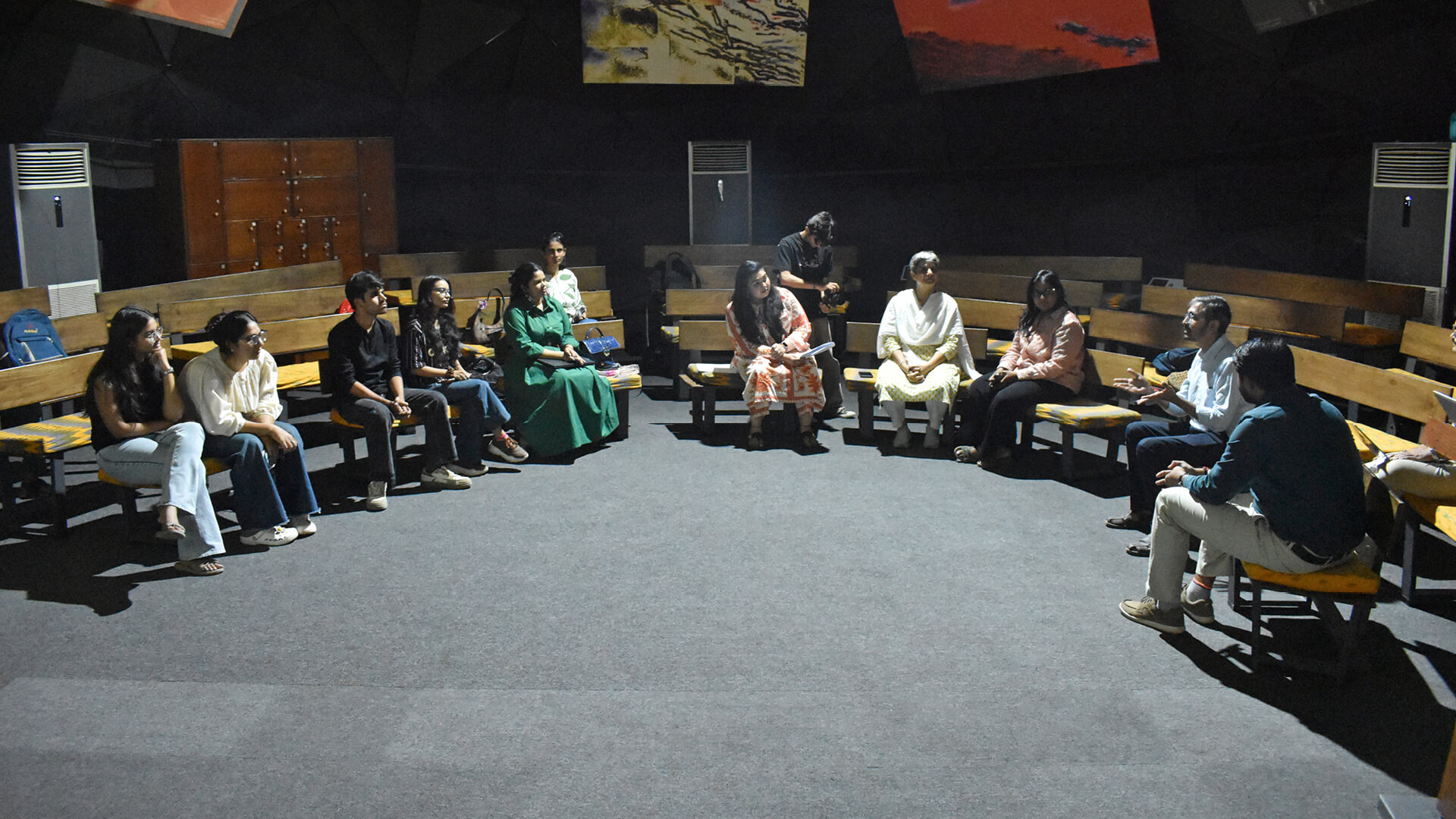
The festival's approach was deliberately grounded. Rather than treating the climate crisis as a subject to be dissected in galleries far removed from those most affected, it put artists into conversation with communities living through extreme heat, water stress and polluted air. The city has responded in policy too, folding a climate budget into its municipal accounts and joining the C40 Cool Cities Accelerator.
For a young festival, the second edition suggests a model worth watching: art not as commentary on the crisis from a safe distance, but as a way of gathering people — in markets, on riverfronts, in community halls — around how to live with it.