Market dispatch·Global
$2.93M for a Five-Cent Coin: 1792 Half Disme Sets Record at Heritage Auctions
A 1792 Half Disme graded PCGS MS68 sold for $2,928,000 at Heritage Auctions' October 8-9 GACC U.S. Coins Signature Auction, more than doubling the previous auction record for the denomination. The same week, a fragment of a $20 bill tied to the 1971 D.B. Cooper hijacking fetched $134,200, and Heritage's coin and currency sales together topped $19 million.
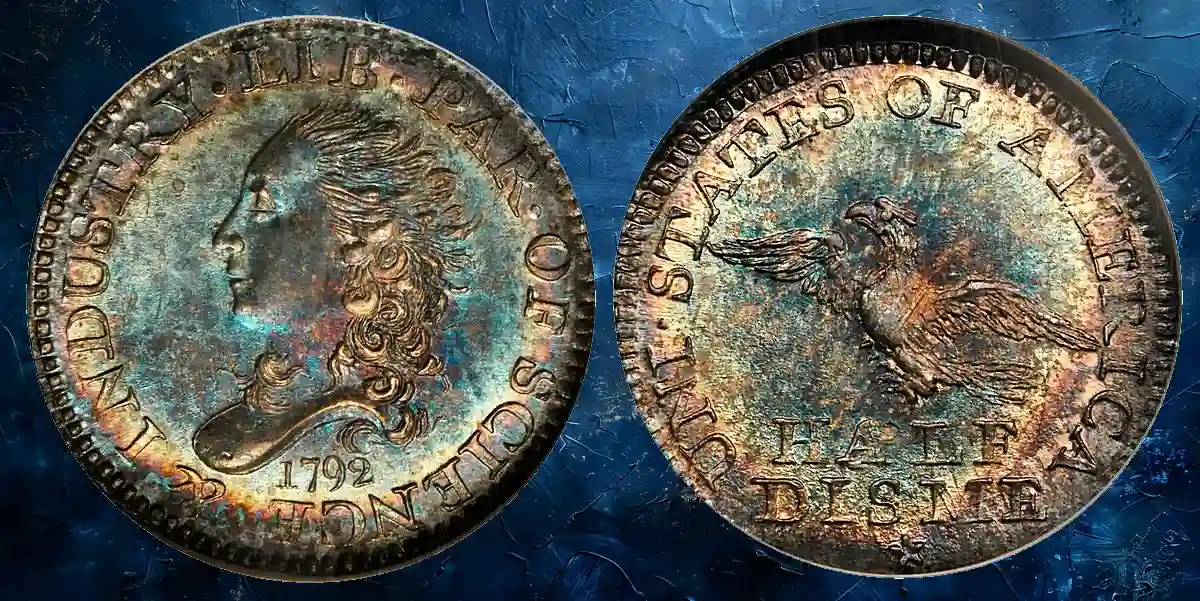
A silver coin roughly the size of a modern five-cent piece has become one of the biggest numismatic stories of the year. The 1792 Half Disme, graded PCGS MS68, sold for $2,928,000 at Heritage Auctions' GACC U.S. Coins Signature Auction on October 8-9, after drawing 66 bids. The result more than doubled the previous auction record of $1.41 million for a half disme, a mark Heritage itself set in 2013. It stands as the only regular-strike 1792 Half Disme to earn the MS68 grade from PCGS. The half disme dates to the very start of federal coinage in the United States. Congress passed the Coinage Act on April 2, 1792, creating the U.S. Mint and a decimal currency that included a five-cent piece called the half disme. With the new Mint's Philadelphia facility not yet ready, the earliest examples were apparently struck in the cellar of a Philadelphia sawmaker. Secretary of State Thomas Jefferson recorded receiving 1,500 pieces on July 13, 1792, and President George Washington told Congress that November of a small beginning in half disme coinage. Heritage's latest research has also questioned the coin's traditional attribution to first Mint Director David Rittenhouse. The rest of the sale underlined how much history American coinage carries. An 1867-S Liberty Head Half Eagle, graded MS63 and found in a cigar box inside a bedroom closet in Buda, Texas, sold for $97,600, more than four times the previous auction record for the date; Heritage calls it the finest known example. An 1898 proof double eagle reached $238,577, and a 1907 Saint-Gaudens High Relief double eagle made $97,600. The companion currency auction, held October 6-9, was led by a Series 1934 $10,000 Federal Reserve Note from the Binion Hoard at $244,000. Its most talked-about lot was a torn fragment of a 1969 $20 bill, serial number L32796069A, tied to the 1971 D.B. Cooper hijacking, which sold for $134,200. The fragment came from the $5,800 in ransom bills that eight-year-old Brian Ingram found along the Columbia River in 1980. Together, the coin sale contributed $10,665,743 and the currency sale more than $8.7 million.
.jpg?mode=max)